Skip to content
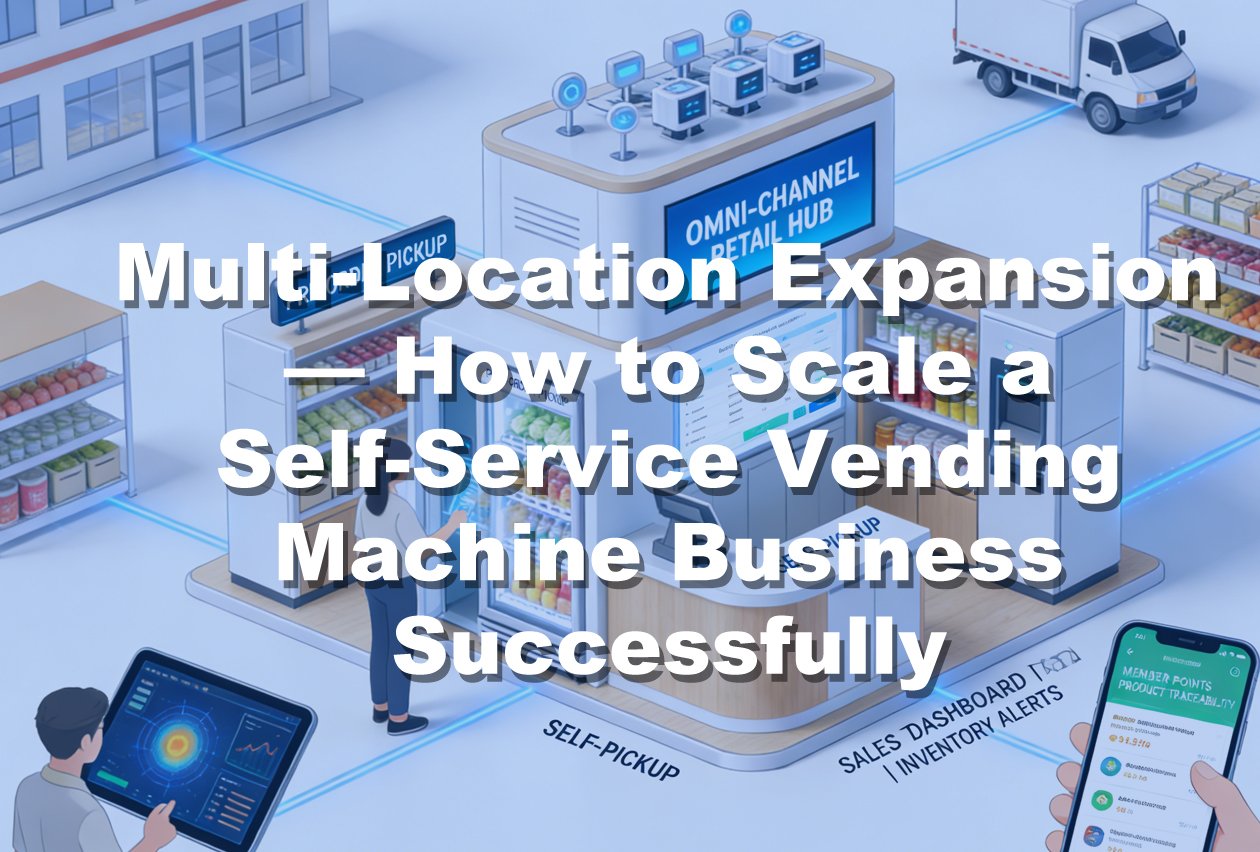
As automated retail matures in 2026, the biggest opportunity for operators is no longer launching a single machine—it’s scaling across multiple locations.
Many vending businesses start small, but true profitability and long-term growth come from building a network. However, expansion is not simply about placing more machines. Without a clear strategy, scaling can quickly lead to operational inefficiencies, increased costs, and inconsistent performance.
Successful operators treat expansion as a structured process—one driven by data, standardization, and smart decision-making.
Why Scaling Matters in Automated Retail
A single vending machine can generate steady income, but its growth potential is limited.
Scaling to multiple locations allows operators to:
- Increase total revenue
- Diversify risk across locations
- Strengthen brand presence
- Improve operational efficiency through scale
A well-managed network creates a more stable and resilient business.
Step 1: Build a Strong Foundation First
Before expanding, operators must ensure that their initial machines are performing well.
Key indicators include:
- Consistent sales performance
- Positive ROI
- Stable operations
- Reliable maintenance routines
Scaling a weak model will only multiply problems. A strong foundation ensures that expansion is sustainable.
Step 2: Standardize Operations
Standardization is essential for managing multiple machines efficiently.
Operators should establish clear processes for:
- Inventory management
- Restocking schedules
- Maintenance procedures
- Pricing strategies
Standardization reduces complexity and ensures consistent performance across locations.
Step 3: Choose Locations Strategically
Location selection becomes even more critical during expansion.
Operators should prioritize:
- High-traffic areas
- Locations with proven demand
- Environments with limited competition
Using performance data from existing machines can help identify similar high-potential locations.
Expanding blindly without location analysis increases risk and reduces overall efficiency.
Step 4: Leverage Data for Decision-Making
Data plays a central role in scaling.
Operators should use analytics to:
- Identify top-performing locations
- Understand product trends
- Optimize pricing strategies
- Detect underperforming machines
Data-driven expansion is more efficient and less risky than relying on intuition alone.
Step 5: Optimize Logistics and Operations
As the number of machines grows, logistics become more complex.
Operators must focus on:
- Efficient restocking routes
- Inventory planning
- Technician scheduling
Optimizing operations reduces costs and improves overall performance.
Without proper planning, operational inefficiencies can quickly erode profits.
Step 6: Invest in Remote Management Systems
Managing multiple locations manually is not scalable.
Cloud-based systems allow operators to:
- Monitor all machines from a central platform
- Track real-time performance
- Receive maintenance alerts
- Update pricing and content remotely
Technology is the backbone of scalable vending operations.
Step 7: Maintain Consistency Across Locations
Consistency is key to building a strong vending network.
Customers should experience:
- Reliable machine performance
- Consistent product quality
- Easy-to-use interfaces
Consistency builds trust and strengthens brand recognition across locations.
Step 8: Manage Costs Carefully
Expansion requires investment, and costs must be controlled.
Operators should monitor:
- Equipment costs
- Inventory expenses
- Location fees or commissions
- Maintenance and service costs
Balancing growth with cost control ensures long-term profitability.
Step 9: Build Strong Location Partnerships
Scaling often involves working with property owners and facility managers.
Strong partnerships can provide:
- Access to premium locations
- Better placement opportunities
- Long-term stability
Clear agreements and good communication are essential for maintaining these relationships.
Step 10: Continuously Evaluate and Adjust
Scaling is not a one-time process—it requires ongoing optimization.
Operators should regularly:
- Review performance metrics
- Relocate underperforming machines
- Test new products or strategies
Continuous improvement ensures that the network remains efficient and competitive.
Common Mistakes in Expansion
Operators should avoid:
Expanding Too Quickly
Rapid growth without proper systems can lead to operational breakdowns.
Ignoring Data
Decisions based on assumptions rather than data increase risk.
Poor Location Selection
Even a well-managed machine will struggle in the wrong location.
Lack of Operational Planning
Without efficient logistics, costs can quickly exceed revenue gains.
Future Trends in Vending Expansion
As automated retail evolves, scaling strategies will continue to improve.
Emerging trends include:
- AI-driven location analysis
- Automated restocking optimization
- Integrated multi-location dashboards
- Smart city infrastructure integration
These innovations will make it easier for operators to expand efficiently and manage large networks.
Conclusion
Scaling a self-service vending machine business requires more than adding machines—it requires strategy, discipline, and data-driven decision-making.
Operators who focus on strong foundations, standardized operations, and efficient management systems can build profitable, scalable vending networks.
In 2026 and beyond, the most successful businesses will not be those with the most machines—but those that manage their networks most effectively.