Skip to content
If you’ve been researching business ideas, you’ve probably seen this phrase everywhere:
👉 “Passive income”
And naturally, phone case vending machines are often described as:
- Automated
- Hands-free
- Easy income
But let’s be honest for a moment:
Is it really passive?
Or is that just marketing language?
In this article, we’ll break down the real truth — what’s passive, what’s not, and whether this business actually fits your expectations.
1. What People Think “Passive Income” Means
Most beginners imagine something like this:
- Set up once
- No daily involvement
- Money comes in automatically
Reality Check
👉 That version of passive income is rare in any business
Why This Matters
If your expectations are unrealistic,
you’ll feel disappointed — even if the business is profitable.
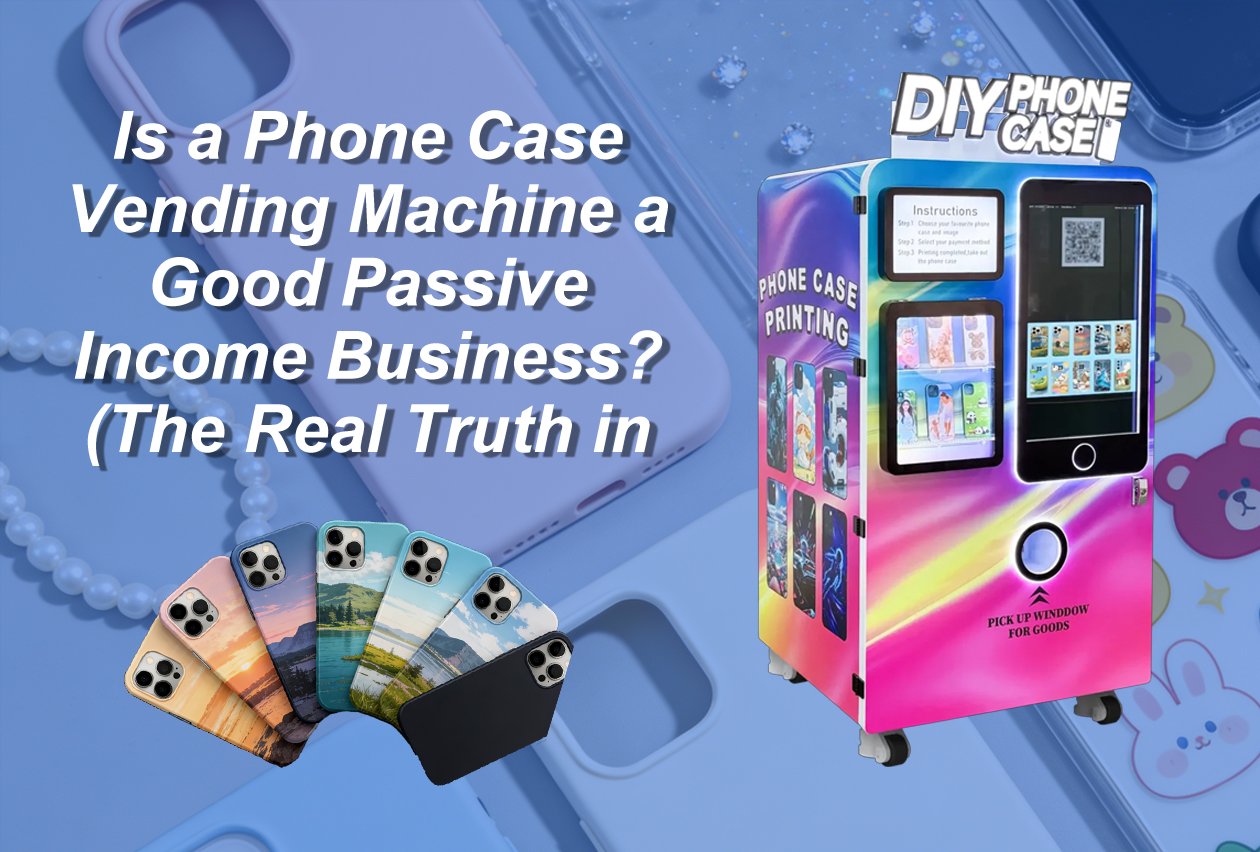
2. What a Phone Case Vending Machine Actually Is
Let’s define it clearly:
👉 It is a semi-automated business
What’s Automated
- Sales process
- Payment collection
- Product creation
- Customer interaction
What’s Not Automated
- Refilling materials
- Maintenance
- Performance optimization
- Location management
👉 So yes — it reduces effort, but it doesn’t eliminate it
3. How Much Time Do You Really Need?
This is where things become more realistic.
Typical Weekly Time Commitment
- 1–3 hours per machine
Includes
- Checking materials
- Cleaning
- Monitoring performance
- Small adjustments
👉 Compared to traditional retail, this is extremely low
4. Why People Still Call It “Passive”
Because compared to other businesses:
No Need For
- Daily staff management
- Customer service teams
- Inventory shipping
- Constant online marketing
Result
👉 Income continues even when you’re not present
That’s why it’s often labeled as “passive”
5. The Real Advantage: Leverage
The real strength of this business is not passivity.
It’s leverage.
What Does That Mean?
- One machine generates daily income
- Multiple machines multiply that income
- Time input does not increase proportionally
Example
- 1 machine → 2 hours/week
- 5 machines → 5–8 hours/week
👉 This is how scalable income is built
6. Passive vs Active Income Comparison
Let’s put it in perspective.
Fully Active Business (e.g., kiosk)
- Daily presence required
- Fixed working hours
- High labor cost
Vending Machine Model
- Minimal weekly involvement
- Flexible schedule
- Automated sales
👉 It sits in the middle — closer to passive than active
7. The Biggest Misunderstanding
Here’s where many beginners go wrong:
Mistake
Thinking:
👉 “I don’t need to do anything”
Reality
The business still requires:
- Setup
- Monitoring
- Optimization
👉 Ignoring these leads to poor performance
8. What Happens If You Treat It as Fully Passive?
Likely Outcome
- Machine runs out of materials
- Technical issues go unnoticed
- Sales decline
- Location performance drops
👉 Passive mindset = lost income
9. What Successful Operators Do Differently
They don’t chase “no work”
They focus on:
Smart Effort
- Regular checks
- Data monitoring
- Design updates
- Location optimization
Result
- Stable income
- Higher performance
- Long-term growth
👉 Small effort, big return
10. Is It a Good Passive Income Business?
Let’s answer honestly.
YES — If You Want:
- Low time commitment
- Semi-automated income
- Scalable business model
- Flexible management
NO — If You Expect:
- Zero involvement
- Instant results
- No learning curve
👉 It’s not magic — it’s a system
11. Why This Model Works Well in 2026
Consumer behavior is changing.
People prefer:
- Self-service
- Instant results
- Convenience
This Supports
- Automated retail
- Vending machine growth
- On-demand products
👉 The model aligns with modern habits
12. The Best Way to Think About It
Don’t think:
👉 “passive income machine”
Think:
👉 “low-effort, high-efficiency business system”
Why This Mindset Works
- Sets realistic expectations
- Encourages better decisions
- Leads to consistent results
Day 29 Conclusion: It’s Not Passive — It’s Efficient
A phone case vending machine is not a “do nothing and earn” system.
But it is:
- Highly efficient
- Low-maintenance
- Scalable
And that combination is rare.
If you approach it correctly, it can become:
👉 A steady, semi-passive income stream that grows over time.
The difference is simple:
Unrealistic expectations → frustration
Clear understanding → consistent profit