Skip to content
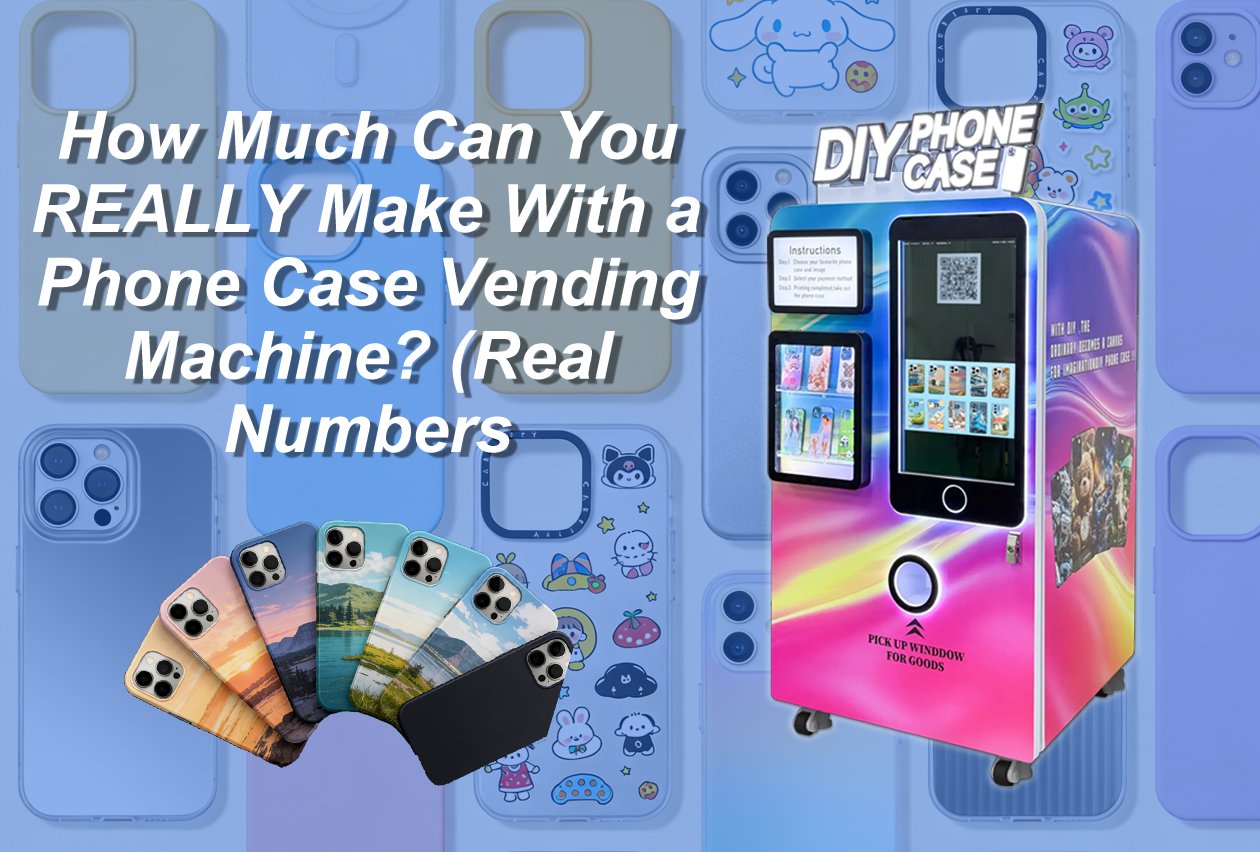
One of the biggest reasons people become interested in phone case vending machines is simple:
👉 The income potential
But after the excitement fades, the real question appears:
How much money can you actually make?
Not exaggerated numbers.
Not “social media millionaire” claims.
Just realistic, practical income expectations.
In this guide, we’ll break down:
- Real revenue scenarios
- Monthly profit estimates
- Best vs average performance
- What actually affects earnings
So you can evaluate this business with clear expectations.
1. Understanding the Revenue Model
A phone case vending machine makes money through simple math:
Revenue Formula
Sales Per Day × Profit Per Sale = Daily Profit
Typical Numbers
- Selling price: $20–$40
- Average production cost: ~$5
Average Profit Per Sale
👉 Around $15–$30
This is why the business attracts attention:
👉 High-margin product + automated sales
2. Low Performance Scenario (Beginner Level)
Let’s start conservatively.
Example
- 5 sales/day
- Average selling price: $25
- Profit per sale: $20
Monthly Calculation
5 × $20 = $100/day profit
👉 Monthly profit: ~$3,000
What This Usually Means
- Average location
- Minimal optimization
- Beginner setup
👉 Even lower-performance setups can still generate meaningful income
3. Moderate Performance Scenario (Most Common)
This is where many successful operators operate.
Example
- 10 sales/day
- Average profit per sale: $20
Monthly Calculation
10 × $20 = $200/day
👉 Monthly profit: ~$6,000
Typical Conditions
- Good location
- Solid machine visibility
- Strong design selection
👉 This is often considered the “realistic target range”
4. High Performance Scenario (Strong Locations)
Now let’s look at premium setups.
Example
- 20 sales/day
- Average profit per sale: $25
Monthly Calculation
20 × $25 = $500/day
👉 Monthly profit: ~$15,000/month
Usually Found In
- Large malls
- Airports
- Tourist areas
- High-engagement locations
👉 Exceptional locations dramatically change income potential
5. What Determines Your Earnings?
This is the most important section.
Because machines don’t magically print money.
Performance depends on several factors.
Factor #1: Location Quality
This is the biggest one.
Strong Locations Have
- High foot traffic
- Long dwell time
- Relaxed customer behavior
Weak Locations Have
- Fast-moving crowds
- Low visibility
- Minimal engagement
👉 Location directly affects daily sales
Factor #2: Design Selection
People buy visually.
High-Converting Designs Include
- Personalized photos
- Trend-based graphics
- Clean minimalist styles
Weak Designs Reduce
- Attention
- Interaction
- Conversion rates
👉 Good designs increase impulse purchases
Factor #3: Machine Visibility
Even inside a good venue, placement matters.
Strong Placement
- Open areas
- Near seating
- Natural traffic flow
Weak Placement
- Hidden corners
- Blocked visibility
- Low engagement zones
👉 Visibility increases interaction
Factor #4: Pricing Strategy
Pricing changes both:
- Perceived value
- Profit margin
Recommended Range
👉 $20–$40
Why This Works
Customers associate customization with premium value.
6. What About Monthly Expenses?
Let’s stay realistic.
Typical Monthly Costs
- Location fee
- Materials
- Maintenance
- Electricity
Average Monthly Cost Range
👉 ~$2,000–$4,000
Why Margins Stay Strong
Because there’s:
- No staff salary
- No large retail rent
- Low operational complexity
👉 Automated retail keeps overhead low
7. Can One Machine Replace a Full-Time Income?
In some cases:
👉 Yes
Example
If one machine generates:
- $4,000–$6,000 monthly profit
That already exceeds many traditional salaries.
But Important:
This depends heavily on:
- Location quality
- Consistent management
- Proper optimization
👉 Strong execution matters more than hype
8. What Happens When You Scale?
This is where the business becomes powerful.
Example
1 Machine
→ ~$4,000/month profit
3 Machines
→ ~$12,000/month profit
5 Machines
→ ~$20,000+/month potential
Why Scaling Works
Each additional machine:
- Adds income
- Requires relatively little extra time
👉 This creates leveraged growth
9. Realistic Expectations for Beginners
Let’s avoid unrealistic thinking.
Your First Machine Is Usually About:
- Learning operations
- Understanding customer behavior
- Testing locations
Most Operators Improve Over Time
Because they learn:
- Which designs sell
- Which locations perform
- How to optimize placement
👉 Experience increases profitability
10. The Biggest Income Myth
Many people think:
👉 “The machine alone makes money”
That’s incomplete.
The Reality
The machine is a tool.
Income comes from:
- Smart placement
- Good execution
- Consistent management
👉 Business strategy creates profit
11. Is the Income Stable?
Compared to many online businesses:
👉 Usually more stable
Why?
- Physical foot traffic
- Localized competition
- No dependence on advertising algorithms
Compared To Dropshipping
- Less volatility
- More predictable daily sales
👉 Stability is a major advantage
12. What’s the Real Opportunity?
The real opportunity isn’t just one machine.
It’s building:
👉 A scalable automated retail system
Why This Matters
- Multiple income points
- Flexible management
- Long-term expansion potential
👉 That’s how operators move from side income to real business ownership
Conclusion: The Numbers Are Real — If the Strategy Is Right
So, how much can you really make?
The answer is:
👉 Anywhere from a few thousand dollars to a multi-machine scalable income business.
But success depends on:
- Location
- Execution
- Optimization
- Consistency
A phone case vending machine is not a shortcut to instant wealth.
But it is a high-margin business model with strong earning potential when managed properly.
And in 2026, that combination is becoming increasingly valuable.