Skip to content
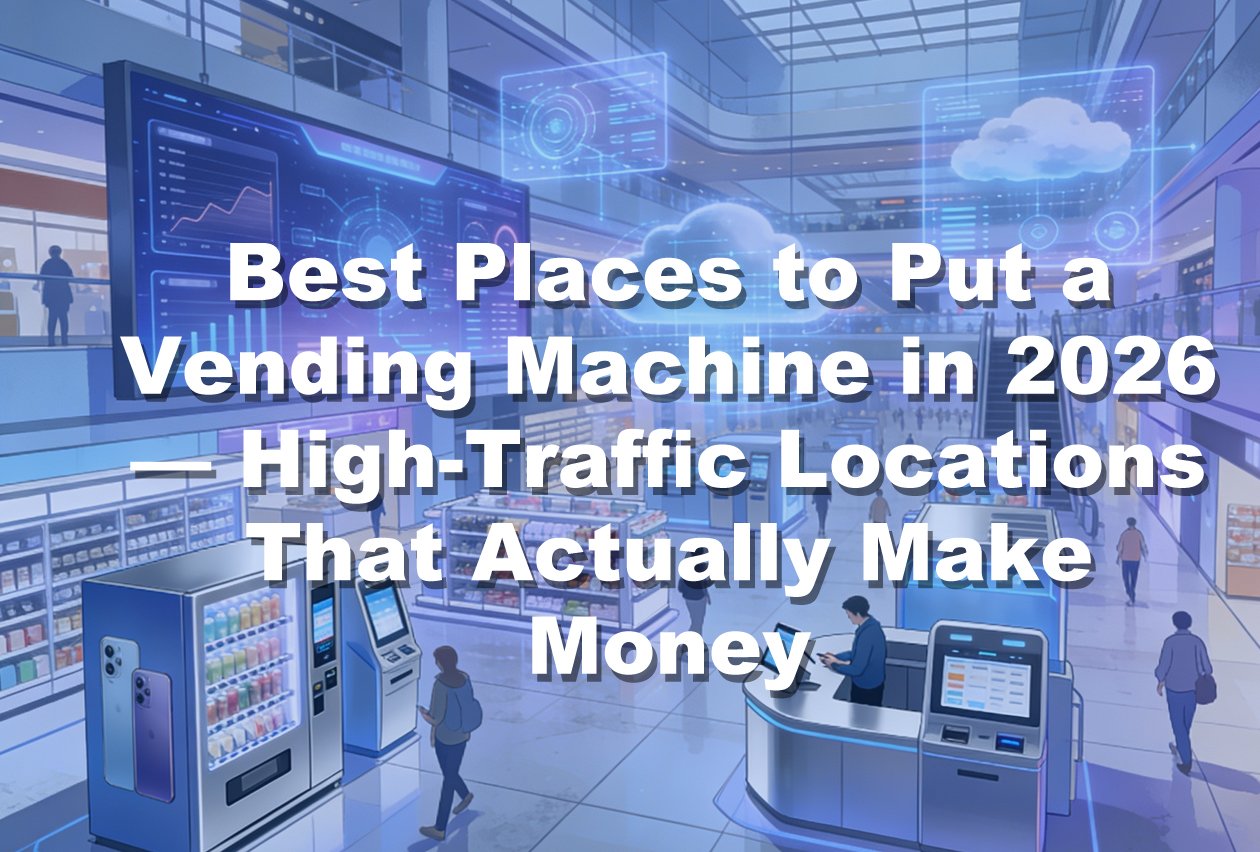
One of the biggest reasons vending machines fail has nothing to do with the machine itself.
It’s the location.
In the vending machine business, location is everything. A basic self-service vending machine in the right place can outperform a premium machine in the wrong environment.
In 2026, successful vending operators are becoming far more strategic about placement. Instead of chasing random “high traffic,” they focus on locations where people actually need convenience, speed, and accessibility.
This guide explores the best vending machine locations, what makes them profitable, and the mistakes operators should avoid.
Why Location Matters So Much
A vending machine is a convenience business.
People buy from vending machines because:
- They need something quickly
- A traditional store is inconvenient
- The purchase is impulse-driven
That means your machine must be placed where:
- Demand already exists
- Foot traffic is consistent
- Convenience matters
👉 Important:
High traffic alone does NOT guarantee profit.
What Makes a Good Vending Location?
The best locations usually have five things:
1. Consistent Foot Traffic
You want recurring daily movement—not occasional crowds.
2. Limited Competition
Too many nearby food or retail options reduce vending demand.
3. Dwell Time
People waiting, resting, or spending time nearby buy more often.
4. Accessibility
Machines should be easy to see and easy to use.
5. Strong Convenience Demand
The best locations solve immediate customer needs.
Best Vending Machine Locations in 2026
1. Office Buildings
Office environments remain one of the strongest vending categories.
Why they work:
- Daily repeat traffic
- Employees value convenience
- Limited time for shopping breaks
Best for:
- Snacks
- Drinks
- Everyday essentials
👉 Offices create stable and predictable demand.
2. Apartment Complexes and Residential Buildings
Residential vending is growing rapidly in 2026.
Why it works:
- Residents want 24/7 convenience
- Repeat customers are built in
- Less competition late at night
Modern residential communities increasingly expect self-service retail access.
3. Transportation Hubs
Places with waiting time perform extremely well.
Examples:
- Train stations
- Bus terminals
- Airport waiting zones
Travelers often make impulse purchases because of:
- Time pressure
- Convenience needs
- Limited alternatives nearby
4. Hospitals and Healthcare Facilities
Healthcare locations operate around the clock.
Why they perform well:
- Staff work long shifts
- Visitors spend extended time onsite
- Demand exists 24/7
Hospitals often provide highly stable vending revenue.
5. Gyms and Fitness Centers
Fitness-focused locations create targeted demand.
Customers frequently look for:
- Drinks
- Quick energy products
- Convenience items
The key is aligning products with the audience.
6. Schools and Campuses
Educational environments provide:
- Heavy daily traffic
- Repeat users
- Predictable schedules
However:
- Rules and regulations may apply
- Product selection matters significantly
7. Hotels
Hotels create strong convenience-driven purchasing behavior.
Guests often buy:
- Late-night items
- Travel essentials
- Quick snacks and beverages
Hotels are especially valuable because customers are unfamiliar with nearby stores.
8. Manufacturing Facilities and Warehouses
Industrial environments are underrated vending locations.
Why they work:
- Long shifts
- Limited nearby retail
- Large employee populations
Workers value quick access during short breaks.
9. Entertainment Venues
Examples:
- Cinemas
- Arcades
- Sports facilities
- Family entertainment centers
These locations benefit from:
- High impulse purchasing
- Long dwell times
- Emotional buying behavior
10. Mixed-Use Commercial Spaces
Modern urban developments combine:
- Offices
- Retail
- Residential units
This creates continuous traffic throughout the day.
The Most Common Location Mistakes
Mistake 1: Chasing “Busy” Without Demand
A crowded location isn’t automatically profitable.
Example:
A mall food court may have huge traffic but too many alternatives.
Mistake 2: Ignoring Demographics
Products must match the audience.
A machine that works in a gym may fail in an office.
Mistake 3: Poor Visibility
If customers don’t notice the machine, sales suffer.
Mistake 4: Weak Placement Inside the Location
Even inside a good building, placement matters.
Best positions include:
- Entrances
- Waiting areas
- Break rooms
- Elevators and common zones
How to Evaluate a Location Before Installing
Before placing a machine, analyze:
Foot Traffic
How many people pass daily?
Traffic Timing
Is traffic steady or only occasional?
Nearby Competition
Are there stores or restaurants nearby?
Customer Behavior
Do people spend time waiting there?
Accessibility
Can people easily stop and use the machine?
Should You Pay for Locations?
Sometimes yes.
Common models:
- Revenue sharing
- Monthly rent
- Hybrid agreements
👉 Strong locations are often worth paying for.
The goal is ROI—not avoiding all costs.
Smart Operators Use Data
Modern vending businesses increasingly use data to evaluate locations.
Operators track:
- Revenue by machine
- Time-based sales trends
- Product performance by location
This allows better expansion decisions and faster optimization.
Future Trends in Vending Locations
In 2026 and beyond, location strategy is evolving.
Emerging trends include:
- Smart residential communities
- Automated retail hubs
- Micro-retail environments
- Smart city integration
The best locations are shifting toward places where convenience and automation naturally fit daily life.
Conclusion
The success of a vending machine business depends heavily on where machines are placed.
Great locations create:
- Higher sales
- Better ROI
- Faster scaling opportunities
In 2026, successful operators are no longer placing machines randomly—they are strategically selecting locations based on customer behavior, convenience demand, and long-term performance potential.
Because in vending, the right location can change everything.