Skip to content
One of the first questions new entrepreneurs ask is:
How much does it actually cost to start a vending machine business?
The answer depends on your strategy, equipment, and growth goals. In 2026, launching a self-service vending machine business can still be relatively affordable compared to traditional retail, but many beginners underestimate the real costs involved.
The good news is that vending remains one of the most accessible entry points into automated retail. The key is understanding where your money goes, what expenses matter most, and how to avoid overspending early.
This guide breaks down realistic vending machine startup costs and shows how smart operators maximize return on investment from day one.
Why Understanding Startup Costs Matters
Many vending businesses fail not because the model is bad, but because operators:
- Spend too much too early
- Choose poor locations
- Ignore operational costs
- Focus on appearance instead of ROI
Understanding startup costs helps you:
- Plan realistically
- Avoid unnecessary risk
- Build a scalable business foundation
The Main Costs of Starting a Vending Machine Business
1. Vending Machine Cost
This is usually the largest upfront expense.
Pricing varies depending on:
- Machine size
- Technology features
- Payment systems
- Remote management capability
General pricing ranges in 2026:
Basic machines
- Lower upfront investment
- Limited technology features
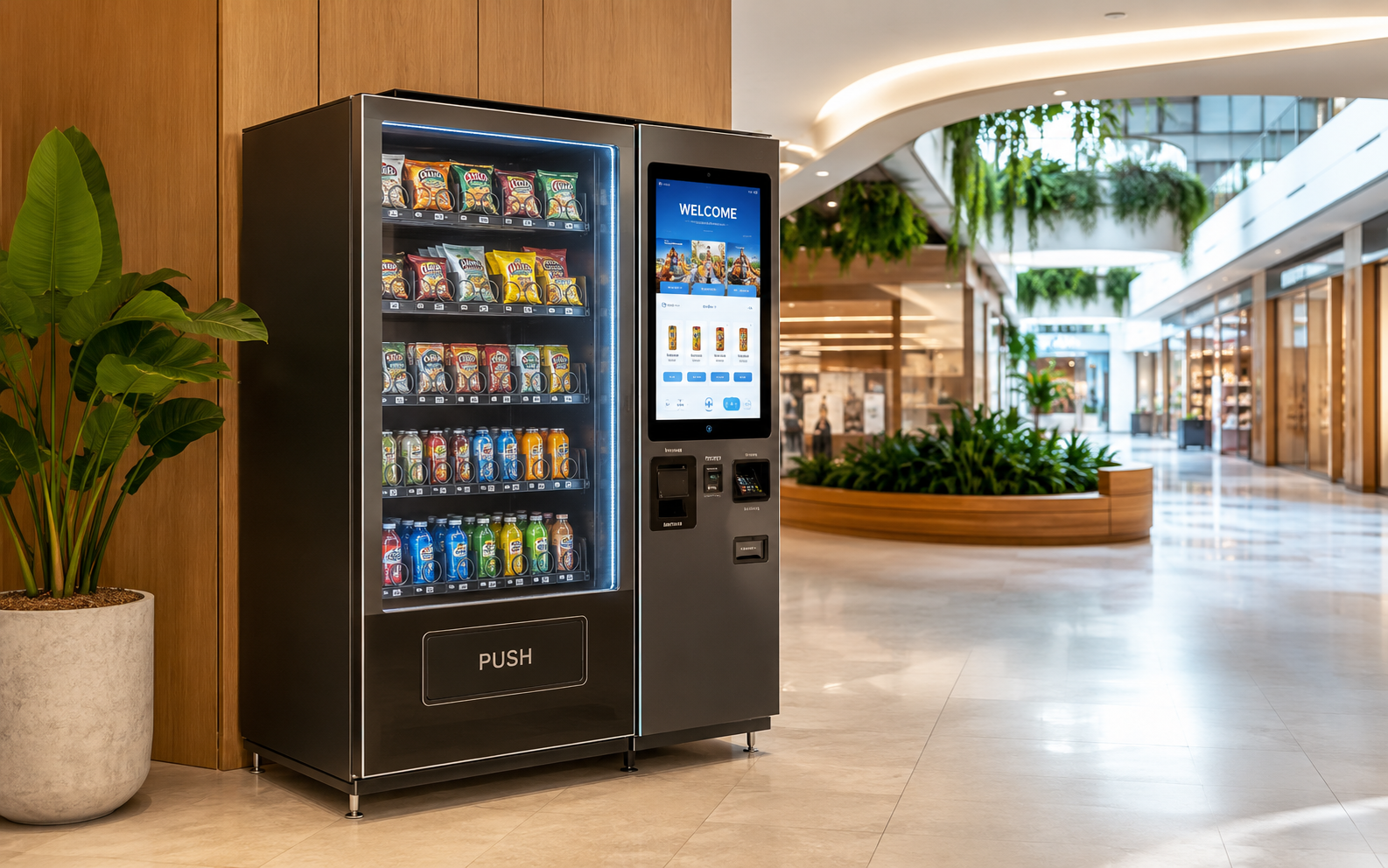
Smart vending machines
- Higher cost
- Better analytics and cashless integration
- More scalable long term
👉 Important:
Cheaper is not always better.
A reliable machine with strong uptime often produces better long-term ROI.
2. Initial Inventory Costs
You’ll need products to stock the machine before launch.
Inventory costs depend on:
- Product category
- Number of slots
- Pricing strategy
Most beginners underestimate how much starting inventory is needed.
You should also budget for:
- Backup inventory
- Product testing
- Replacements for slow-moving items
3. Cashless Payment System Setup
In 2026, cashless payments are essential.
Most machines now require:
- Card readers
- Mobile payment support
- Payment processing systems
Costs may include:
- Hardware installation
- Monthly software/service fees
- Transaction processing fees
👉 Why this matters:
Cashless systems usually increase:
- Sales volume
- Average transaction value
4. Transportation and Installation
Machines are heavy and difficult to move.
Startup costs often include:
- Delivery fees
- Installation costs
- Equipment moving services
This expense increases if:
- Machines must be transported long distances
- Installation locations are difficult to access
5. Location Fees or Revenue Sharing
Many property owners require compensation.
Common models include:
- Revenue sharing
- Monthly rent
- Hybrid agreements
Typical revenue sharing ranges:
- 10%–30% of sales depending on location quality
👉 Premium locations often justify higher commissions.
6. Business Registration and Licensing
Depending on your region, you may need:
- Business registration
- Permits
- Sales tax setup
- Insurance
These costs are often overlooked by beginners.
7. Insurance Costs
Insurance protects against:
- Property damage
- Liability issues
- Theft or vandalism
Even small vending businesses should consider basic coverage.
8. Maintenance and Repairs
Machines require ongoing upkeep.
Typical maintenance expenses include:
- Part replacement
- Cleaning
- Technical servicing
- Software updates
Reliable machines reduce long-term repair costs.
9. Internet and Remote Management Systems
Modern smart vending machines often require connectivity.
This may involve:
- Cellular data plans
- Cloud management software
- Monitoring systems
These tools improve operational efficiency but add recurring costs.
10. Marketing and Branding
Although vending is location-driven, branding still matters.
Possible expenses include:
- Machine wrapping or design
- Signage
- Promotional materials
- Digital content for screens
Strong branding improves visibility and customer trust.
Realistic Beginner Startup Scenarios
Small Starter Setup
Ideal for:
- Beginners
- Side business operators
- Low-risk entry
Focus:
- One or two machines
- Simple operations
- Learning the business
Growth-Oriented Setup
Ideal for:
- Entrepreneurs planning to scale
- Multi-location strategies
Focus:
- Smart vending systems
- Better locations
- Data-driven operations
Higher upfront investment, but stronger scaling potential.
Biggest Cost Mistakes Beginners Make
Mistake 1: Buying Too Many Machines Too Early
More machines do not automatically mean more profit.
Bad locations + too many machines = expensive mistake.
Mistake 2: Choosing Cheap Low-Quality Equipment
Frequent downtime destroys profitability.
Mistake 3: Ignoring Ongoing Costs
Monthly expenses matter just as much as startup costs.
Mistake 4: Spending Too Much on Appearance Initially
ROI matters more than aesthetics in the early stages.
How to Reduce Startup Risk
Smart operators reduce risk by:
- Starting with fewer machines
- Testing locations carefully
- Using sales data early
- Scaling only after profitability is proven
👉 The goal is sustainable growth—not fast expansion without systems.
Is the Investment Worth It?
For many operators, yes.
Why vending remains attractive in 2026:
- Lower overhead than traditional retail
- Growing demand for convenience
- Cashless and smart technology growth
- Scalable business model
However, success still depends on:
- Location quality
- Operational discipline
- Data-driven decisions
How Long Does It Take to Recover Startup Costs?
Payback periods vary widely.
Strong locations may recover costs relatively quickly.
Weak locations may struggle for much longer.
Key factors affecting ROI:
- Sales volume
- Product margins
- Operational efficiency
- Machine uptime
Conclusion
Starting a vending machine business in 2026 can be affordable compared to many other retail businesses, but understanding the full startup cost picture is critical.
The most successful operators focus not on buying the most machines—but on building efficient, profitable systems from the beginning.
Smart investment, strong locations, and disciplined operations are what turn vending from a side idea into a scalable automated retail business.