Skip to content
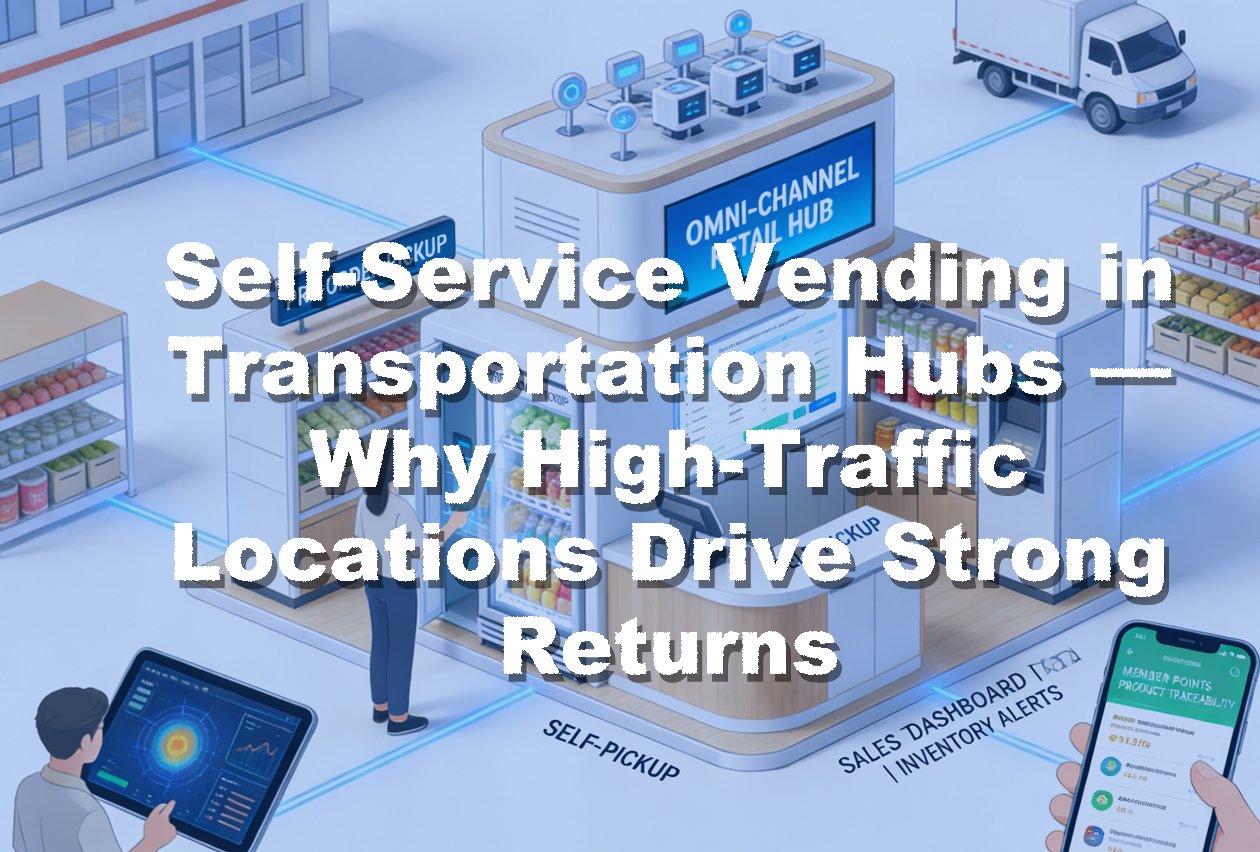
As automated retail continues to expand, transportation hubs have emerged as some of the most valuable environments for self-service vending machines. Airports, train stations, subway systems, and bus terminals all share one key characteristic: constant, high-volume traffic combined with time-sensitive consumer needs.
In 2026, these locations are no longer just transit points—they are becoming dynamic retail ecosystems. For vending operators, transportation hubs offer a unique combination of demand, visibility, and purchasing urgency that is difficult to replicate elsewhere.
Why Transportation Hubs Are Ideal for Automated Retail
Transportation environments create a specific type of consumer behavior. People are often:
- In a hurry
- Waiting between connections
- Unable to leave the area
- Looking for convenience
This combination makes self-service vending machines highly effective in these settings.
Unlike traditional retail stores, vending machines can operate efficiently in compact spaces while serving a continuous flow of customers throughout the day.
The Power of Time Pressure in Consumer Behavior
One of the biggest advantages of transportation hubs is time sensitivity.
Travelers often make quick purchasing decisions based on immediate needs rather than price comparisons. This leads to:
- Higher conversion rates
- Increased impulse purchases
- Reduced price sensitivity
For example, a traveler who forgot an essential item is far more likely to purchase it quickly from a vending machine than search for alternative stores.
High Traffic Doesn’t Always Mean High Sales — Understanding Flow
While transportation hubs offer large crowds, success depends on understanding traffic flow patterns, not just volume.
Operators should consider:
- Entry and exit points
- Security checkpoints
- Waiting areas
- Boarding zones
Locations where people stop and wait—rather than simply pass through—tend to generate higher sales.
Strategic placement within these zones is critical for maximizing performance.
What Products Perform Best in Transportation Locations
Product selection must align with traveler needs.
Popular categories include:
- Travel essentials (chargers, headphones, adapters)
- Personal care items
- Packaged food and beverages
- Convenience goods
The key is to focus on immediate utility—products that solve a problem on the spot.
Operators who tailor their offerings to traveler behavior consistently achieve better results.
24/7 Demand and Operational Advantages
Transportation hubs operate nearly around the clock. This creates continuous demand that vending machines are uniquely positioned to capture.
Self-service vending machines provide:
- Uninterrupted service
- No staffing limitations
- Consistent availability during peak and off-peak hours
This is especially valuable during early mornings, late nights, or flight delays when traditional retail options may be limited.
Digital Payment and International Customers
Transportation hubs attract a global audience, which introduces additional considerations for vending operators.
Modern machines must support:
- Multiple payment methods
- Contactless transactions
- International cards and mobile wallets
A smooth and flexible payment experience is essential for serving diverse customers and maximizing conversion rates.
Premium Pricing Opportunities
Due to urgency and convenience, transportation hubs often support higher price points compared to other locations.
Factors contributing to this include:
- Limited alternatives within secure areas
- Time pressure on consumers
- High willingness to pay for convenience
However, pricing must still be balanced carefully to maintain customer satisfaction and trust.
The Role of Visibility and Placement
Even within high-traffic environments, placement determines performance.
Effective positioning includes:
- Near waiting areas
- Along natural walking paths
- Close to boarding gates or platforms
- Adjacent to seating zones
Machines that are easy to see and access consistently outperform those placed in less visible areas.
Partnerships with Facility Operators
Securing space in transportation hubs typically requires collaboration with:
- Airport authorities
- Transit system operators
- Property management companies
These partnerships often involve:
- Revenue-sharing agreements
- Compliance with operational standards
- Regular maintenance commitments
Strong relationships with facility operators are essential for long-term success in these locations.
Challenges in Transportation Hub Deployment
While the potential is high, there are also challenges.
High Competition for Space
Premium locations within transportation hubs are limited and in high demand.
Strict Regulations
Operators must comply with:
- Security requirements
- Safety standards
- Operational guidelines
Logistics Complexity
Restocking machines in secure or restricted areas can require additional planning and coordination.
Equipment Reliability
High usage environments demand durable and reliable machines. Downtime can lead to significant revenue loss.
Data-Driven Optimization in High-Traffic Environments
Transportation hubs generate large amounts of data, which can be used to optimize performance.
Operators can analyze:
- Peak travel times
- Product demand patterns
- Location-specific performance
With this information, they can adjust inventory, pricing, and placement strategies to improve results.
Future Trends in Transportation Retail
The role of self-service vending machines in transportation hubs will continue to grow as technology evolves.
Future developments may include:
- Integration with travel apps
- Real-time product recommendations
- Personalized offers for travelers
- Smart infrastructure connectivity
As transportation systems become more digitized, vending machines will become increasingly integrated into the overall passenger experience.
Conclusion
Transportation hubs represent one of the most powerful opportunities in automated retail. The combination of high traffic, time-sensitive demand, and limited alternatives creates an ideal environment for self-service vending machines.
However, success in these locations requires more than simply placing a machine. Operators must understand traveler behavior, optimize placement, and continuously refine product and pricing strategies.
In 2026 and beyond, vending operators who master transportation environments will be well-positioned to capture consistent, high-value revenue streams in one of the most dynamic sectors of automated retail.