Skip to content
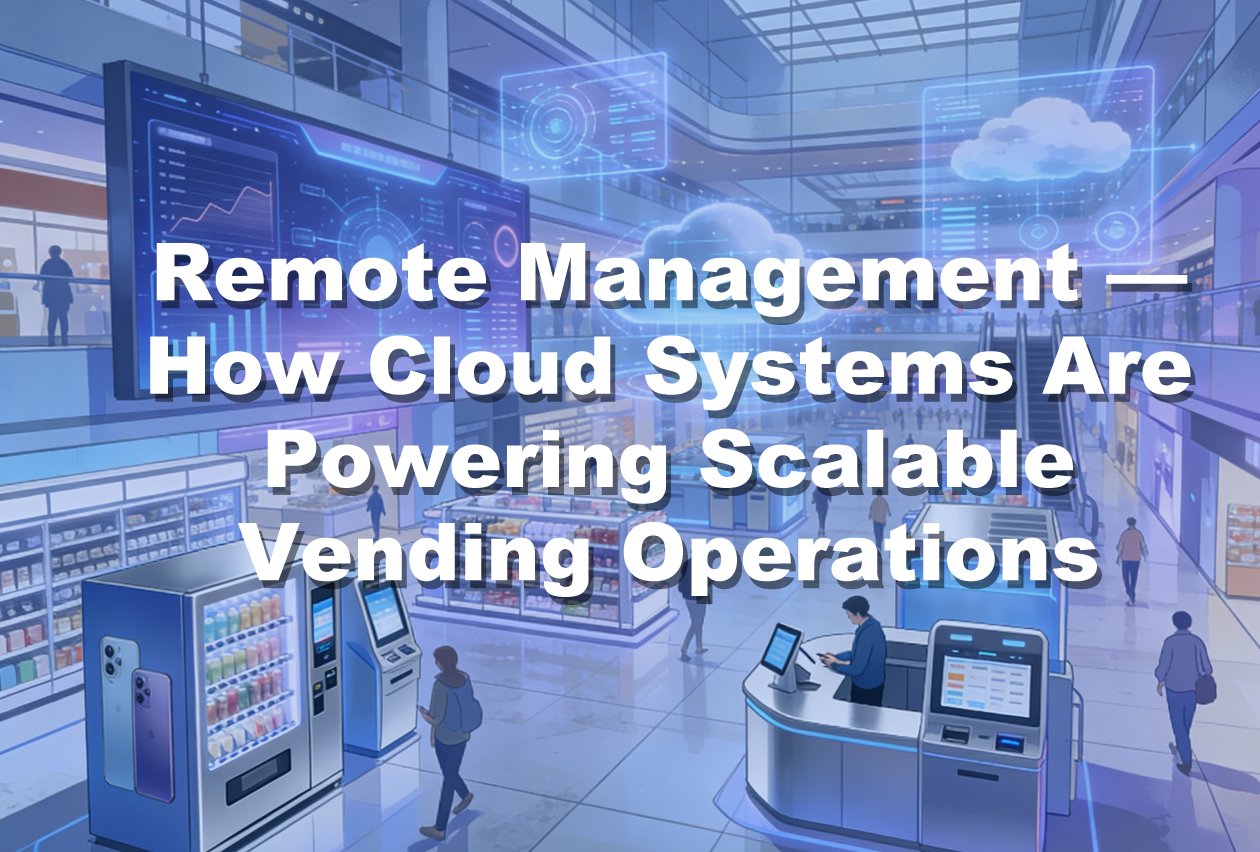
In 2026, the vending machine industry is no longer defined by hardware alone. The real competitive advantage lies in how machines are managed.
As automated retail expands across cities and regions, operators are moving away from manual, on-site management and embracing cloud-based remote management systems.
Self-service vending machines are now part of connected networks, allowing operators to monitor, control, and optimize performance from anywhere. This shift is transforming vending from a local operation into a scalable, data-driven business model.
From Manual Operations to Connected Networks
Traditional vending operations relied heavily on manual processes:
- Physically checking inventory
- Visiting machines on fixed schedules
- Responding to issues only after failures occurred
This approach was time-consuming, inefficient, and difficult to scale.
Today, cloud systems allow machines to communicate in real time, providing operators with instant access to critical data and controls.
What Is Remote Vending Management?
Remote management refers to the use of cloud-based software platforms to monitor and control vending machines.
These systems connect machines through the internet, enabling operators to:
- Track sales in real time
- Monitor inventory levels
- Receive maintenance alerts
- Update pricing and product information
Instead of reacting to problems, operators can now proactively manage their entire network.
Key Benefits of Remote Management Systems
1. Real-Time Visibility
Operators can access live data across all machines, including:
- Sales performance
- Product availability
- Transaction history
This level of visibility allows for faster and more accurate decision-making.
2. Smarter Inventory Management
Remote systems provide detailed insights into inventory levels, helping operators:
- Identify fast-selling products
- Avoid out-of-stock situations
- Reduce excess inventory
With this information, restocking becomes more efficient and targeted.
3. Optimized Restocking Routes
Instead of visiting every machine on a fixed schedule, operators can plan routes based on actual need.
This reduces:
- Travel time
- Labor costs
- Fuel expenses
Efficient routing is especially important for operators managing multiple locations.
4. Remote Pricing and Content Updates
Cloud systems allow operators to update:
- Product pricing
- Promotional offers
- Digital screen content
These changes can be applied instantly across one machine or an entire network.
This flexibility supports dynamic pricing strategies and targeted promotions.
5. Predictive Maintenance
Modern systems can detect early signs of technical issues.
Operators receive alerts for:
- Temperature fluctuations
- Payment failures
- Mechanical problems
By addressing issues early, operators can reduce downtime and maintain consistent service.
Scaling a Vending Business with Technology
Remote management systems are essential for scaling operations.
Without automation, managing dozens or hundreds of machines becomes increasingly complex.
With cloud-based tools, operators can:
- Manage multiple locations from a single dashboard
- Standardize operations
- Maintain consistent performance
This makes it possible to grow a vending business without significantly increasing operational burden.
Data as a Strategic Asset
Remote systems generate valuable data that can be used to improve business performance.
Operators can analyze:
- Location profitability
- Product trends
- Customer behavior patterns
- Time-based sales performance
These insights support better decisions in areas such as:
- Product selection
- Pricing strategy
- Location optimization
Data-driven management is now a key factor in competitive success.
Integration with Payment Systems
Remote management platforms often integrate directly with cashless payment systems.
This allows operators to:
- Track transactions in real time
- Monitor payment performance
- Identify payment-related issues quickly
Integration improves both financial transparency and operational efficiency.
Challenges of Remote Management Adoption
While the benefits are clear, there are also challenges to consider.
Connectivity Requirements
Reliable internet access is essential for real-time data transmission.
Machines in areas with poor connectivity may experience delays or interruptions.
Initial Investment
Implementing cloud systems requires investment in hardware, software, and integration.
However, the long-term efficiency gains often outweigh these costs.
Data Security
With increased connectivity comes the need for strong cybersecurity measures.
Operators must ensure that systems are protected against unauthorized access and data breaches.
The Role of Automation in Daily Operations
Remote management is not just about monitoring—it enables automation.
Operators can automate:
- Inventory alerts
- Maintenance notifications
- Performance reporting
Automation reduces manual workload and allows operators to focus on growth and strategy.
Future Trends in Remote Vending Management
As technology continues to evolve, remote management systems will become even more advanced.
Future developments may include:
- AI-driven decision-making
- Fully automated restocking recommendations
- Integration with smart city infrastructure
- Real-time performance optimization
These innovations will further enhance efficiency and scalability.
Conclusion
Remote management is transforming self-service vending machines into connected, intelligent retail networks. By enabling real-time monitoring, data-driven decision-making, and operational efficiency, cloud systems are redefining how vending businesses operate.
For operators looking to scale, improve performance, and stay competitive, remote management is no longer optional—it is essential.
In the future of automated retail, success will depend not just on where machines are placed, but on how effectively they are managed.