Skip to content
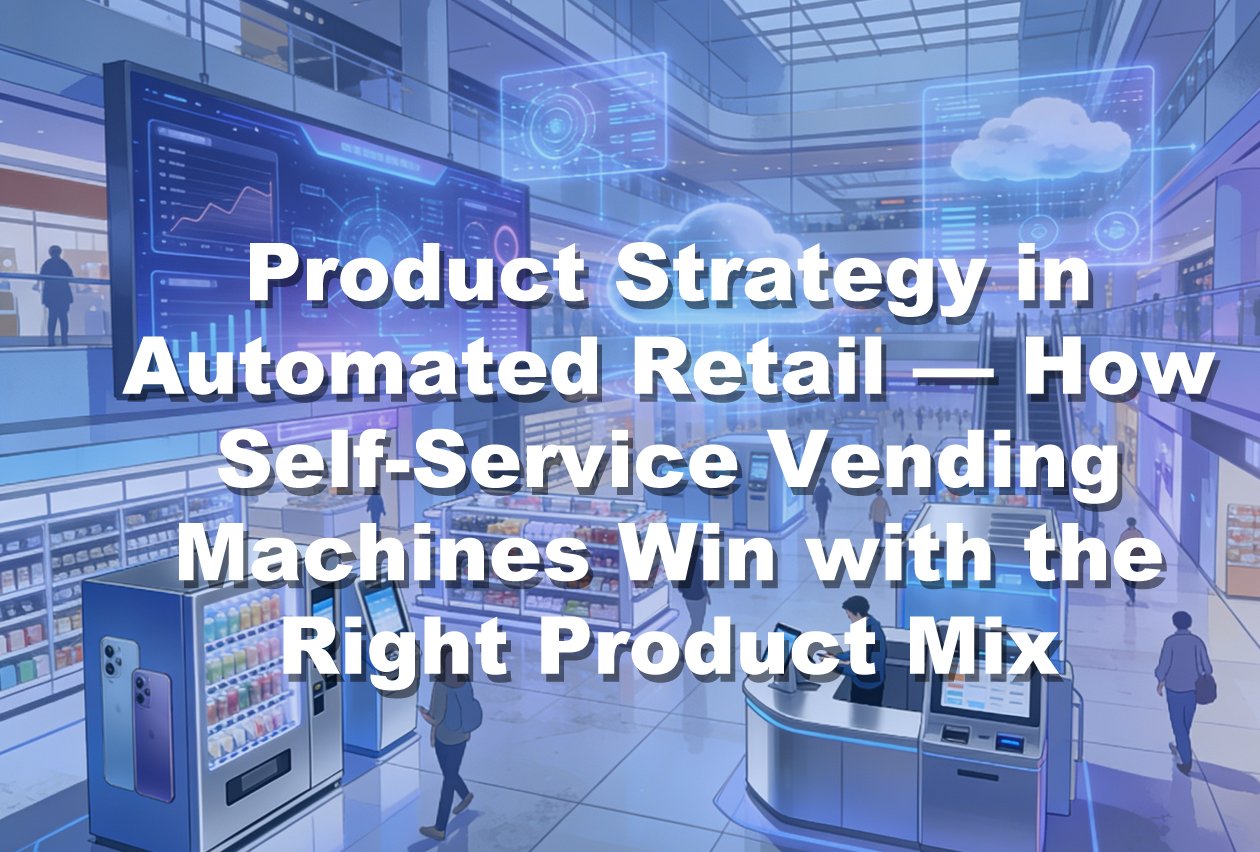
In automated retail, technology and location often get most of the attention. But there is another factor that directly determines success: product strategy.
No matter how advanced a self-service vending machine is, it cannot generate strong revenue without the right products inside. In 2026, successful operators are no longer relying on guesswork—they are building data-driven product strategies tailored to each location and audience.
The difference between an average machine and a high-performing one often comes down to what it sells—and how well those products match customer demand.
Why Product Strategy Matters More Than Ever
In traditional retail, customers can browse large selections and explore alternatives. In a vending environment, choices are limited.
This makes product selection critical.
Every product inside a machine must justify its space by contributing to:
- Sales volume
- Profit margin
- Customer satisfaction
A poorly selected product mix leads to slow turnover, wasted space, and lost revenue opportunities.
Understanding Location-Based Demand
The most important rule in vending product strategy is simple:
Different locations require different products.
Operators must align product selection with the needs of the local audience.
Office Environments
Customers often look for:
- Convenience items
- Quick snacks or beverages
- Everyday essentials
Consistency and reliability are key in these locations.
Transportation Hubs
Travelers need products that solve immediate problems:
- Travel accessories
- Personal care items
- Grab-and-go food options
Speed and utility drive purchasing decisions.
Residential Communities
Residents value convenience and accessibility.
Popular products include:
- Daily essentials
- Household items
- Quick-use goods
Repeat purchases are common in these environments.
Healthcare Facilities
Hospitals and clinics require:
- 24/7 availability
- Practical, easy-to-use products
- Options for both staff and visitors
Demand tends to be steady and predictable.
Balancing Product Variety and Simplicity
Offering too many options can overwhelm customers, while too few options can limit sales.
Successful vending operators aim for a balance:
- Enough variety to meet different needs
- Clear organization to simplify decision-making
A focused product selection helps customers make faster choices and improves overall user experience.
High-Margin vs. High-Turnover Products
A strong product strategy includes a mix of:
High-Turnover Products
- Sell quickly
- Generate consistent cash flow
- Maintain customer engagement
High-Margin Products
- Deliver greater profit per unit
- Often positioned as premium options
- Require strong value perception
Balancing these two categories helps maximize both revenue and profitability.
The Importance of Product Placement
Inside a vending machine, placement matters.
Operators can influence purchasing behavior by:
- Positioning popular products at eye level
- Highlighting high-margin items
- Grouping related products together
Even small adjustments in placement can significantly impact sales performance.
Using Data to Optimize Product Selection
Modern vending machines generate valuable sales data that can be used to refine product strategy.
Operators can track:
- Best-selling items
- Slow-moving products
- Time-based purchasing trends
- Location-specific performance
With this data, operators can:
- Replace underperforming products
- Adjust inventory levels
- Test new product categories
Data-driven decisions lead to continuous improvement.
Seasonal and Trend-Based Adjustments
Consumer demand changes over time.
Operators should adapt product offerings based on:
- Seasonal trends
- Local events
- Weather conditions
For example:
- Certain products may perform better during summer or winter
- Demand may increase during holidays or special events
Flexibility in product strategy helps maintain relevance and maximize sales.
Supplier Partnerships and Product Quality
Strong relationships with suppliers are essential for maintaining product quality and consistency.
Operators should focus on:
- Reliable delivery schedules
- Competitive pricing
- High-quality products
Consistent quality builds customer trust and encourages repeat purchases.
Testing and Iteration
There is no perfect product mix from the start.
Successful operators continuously test and refine their selections.
This includes:
- Introducing new products
- Removing underperforming items
- Adjusting pricing and placement
Ongoing experimentation is key to long-term success.
Common Product Strategy Mistakes
Operators should avoid:
Overloading the Machine
Too many products can reduce clarity and slow decision-making.
Ignoring Local Preferences
A one-size-fits-all approach rarely works across different locations.
Keeping Underperforming Products Too Long
Slow-moving items take up valuable space and reduce overall efficiency.
Lack of Data Analysis
Without data, product decisions become guesswork.
Future Trends in Vending Product Strategy
Product strategy will continue to evolve alongside technology.
Emerging trends include:
- AI-driven product recommendations
- Personalized product offerings
- Real-time inventory optimization
- Integration with digital marketing campaigns
As these trends develop, product strategy will become even more precise and data-driven.
Conclusion
In automated retail, the success of a self-service vending machine depends heavily on what it sells. A strong product strategy aligns with location, meets customer needs, and adapts over time.
Operators who focus on data-driven product selection, balanced inventory, and continuous optimization will achieve better performance and higher profitability.
In 2026, vending is no longer just about placing machines—it is about curating the right products for the right customers in the right locations.