Skip to content
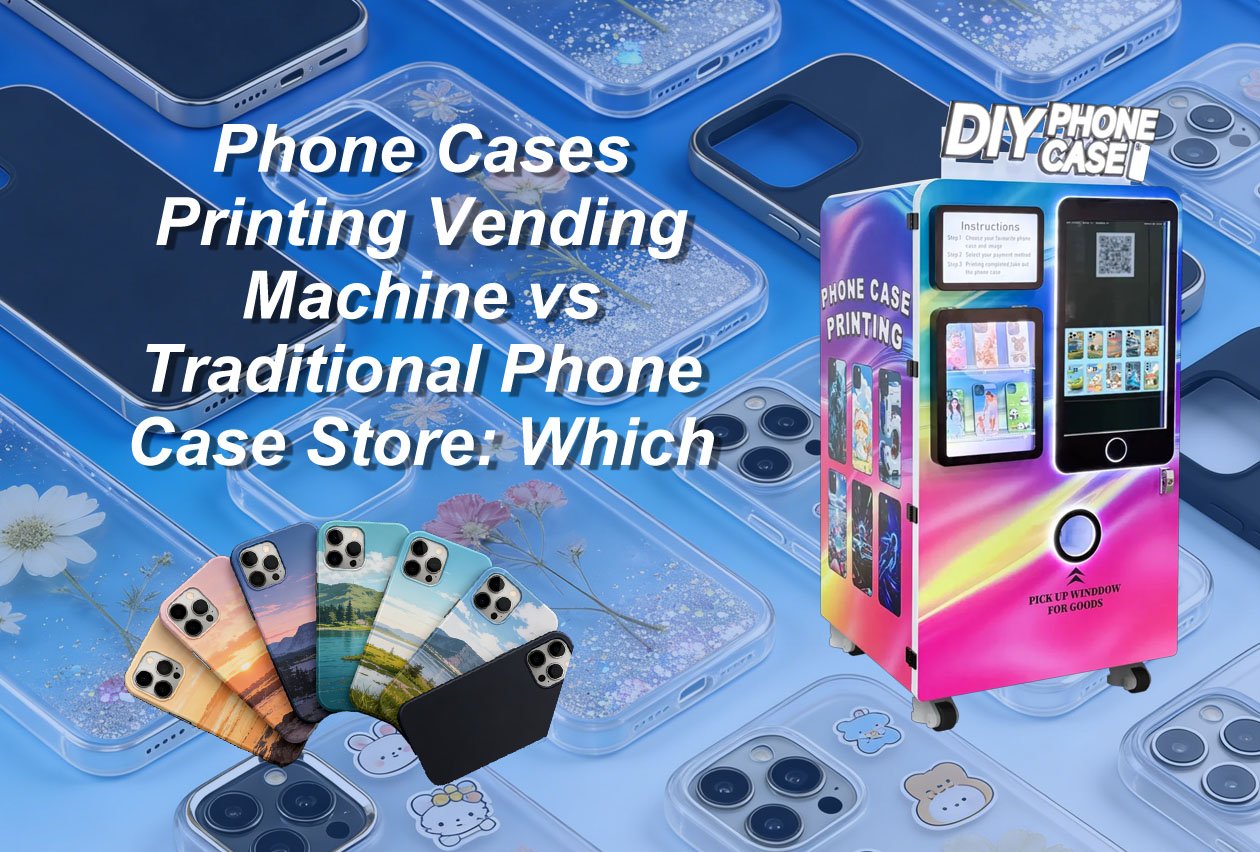
If you want to enter the phone accessories business, you now have two very different options:
👉 Open a traditional phone case store
or
👉 Launch a Phone Cases Printing Vending Machine business
At first glance, both sell similar products.
But operationally, financially, and strategically, they are completely different business models.
In this article, we’ll compare them side-by-side to help you understand:
- Cost differences
- Profitability
- Scalability
- Labor requirements
- Long-term business potential
And most importantly:
👉 Which model makes more sense in 2026 and beyond.
1. Traditional Phone Case Stores: The Old Retail Model
Traditional stores rely on:
- Physical storefronts
- Staff
- Inventory display
- Manual customer service
Typical Features
- High rent
- Daily staffing
- Large inventory
- Fixed operating hours
Main Challenge
High operational pressure.
👉 The business depends heavily on continuous manual management
2. Phone Cases Printing Vending Machines: The New Retail Model
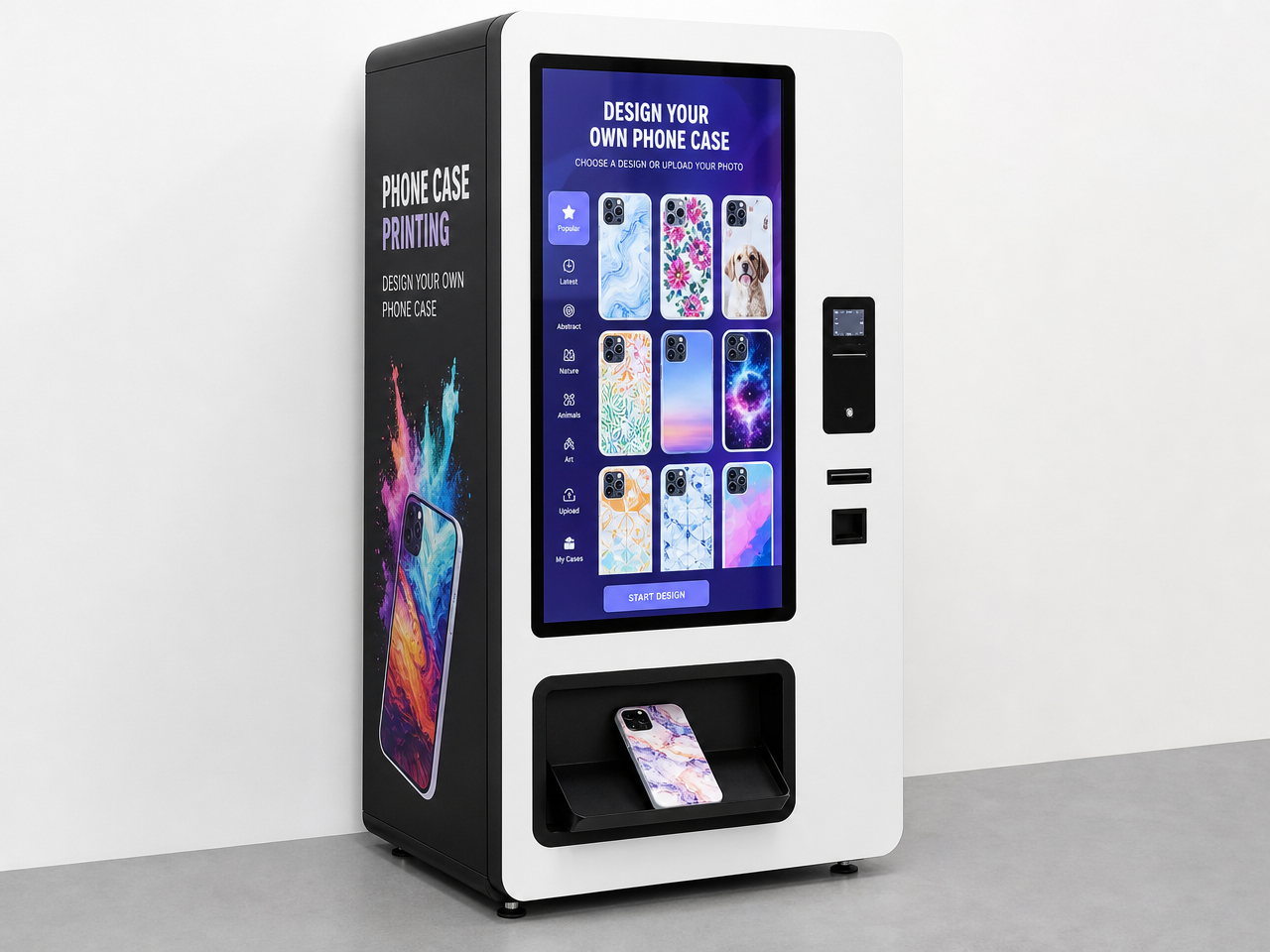
A Phone Cases Printing Vending Machine works differently.
It Combines
- Self-service shopping
- Automated printing
- Instant customization
- Cashless payment systems
Main Advantage
The machine automates most operations.
👉 This dramatically reduces labor and operational complexity
3. Startup Cost Comparison
Let’s compare realistic startup requirements.
Traditional Phone Case Store
Typical Costs
- Store rent deposit
- Renovation
- Staff hiring
- Display furniture
- Inventory stock
Total Startup Range
👉 Often $30,000–$100,000+
Phone Cases Printing Vending Machine
Typical Costs
- Machine purchase
- Setup fee
- Basic materials
- Location agreement
Total Startup Range
👉 Around $8,000–$15,000
👉 The vending machine model has significantly lower entry cost
4. Labor Cost Comparison
Labor is one of the biggest differences.
Traditional Store
Requires:
- Full-time staff
- Shift management
- Customer service employees
Monthly Labor Costs
Can become very expensive over time.
Phone Case Printing Vending Machine
Requires:
- Minimal supervision
- Occasional maintenance
- Material refilling
Typical Weekly Time
👉 Only 1–3 hours per machine
👉 Automation reduces long-term labor expenses dramatically
5. Operating Hours
Traditional stores are limited by staff schedules.
Traditional Retail
- Fixed opening hours
- Closed overnight
- Staff-dependent operations
Phone Cases Printing Vending Machine
Operates:
👉 24/7 in many locations
Why This Matters
Sales continue even when you are not present.
👉 Automation increases operational efficiency
6. Inventory Management Differences
Traditional stores usually require large inventory storage.
Problems Include
- Unsold stock
- Trend changes
- Overstock risk
Phone Cases Printing Vending Machine
Uses on-demand production.
Benefits
- Lower inventory waste
- Flexible design updates
- Faster trend adaptation
👉 On-demand printing reduces inventory risk significantly
7. Customer Experience Comparison
Today’s consumers increasingly prefer convenience.
Traditional Store Experience
- Staff interaction
- Manual browsing
- Standard product selection
Phone Cases Printing Vending Machine Experience
- Instant customization
- Interactive design process
- Fast self-service ordering
Why Customers Enjoy It
The process feels:
- Modern
- Fun
- Personalized
👉 Experience-driven retail attracts modern consumers
8. Scalability Comparison
Scaling a traditional store business is difficult.
Traditional Expansion Requires
- More staff
- More rent
- More management complexity
Phone Cases Printing Vending Machine Expansion
Requires:
- Additional machines
- New locations
- Remote management systems
Result
Scaling becomes:
👉 Faster
👉 Simpler
👉 More efficient
9. Profit Margin Differences
Customized products support strong margins.
Traditional Stores
Often compete heavily on price.
Phone Cases Printing Vending Machines
Sell:
- Personalized products
- Instant printing services
- Experience-based retail
Typical Selling Price
👉 $20–$40 per customized case
Why Margins Are Strong
Customization increases perceived value.
👉 Personalized retail supports premium pricing
10. Flexibility and Mobility
Traditional retail locations are difficult to change.
Traditional Stores
- Long leases
- High relocation cost
- Complex setup changes
Phone Case Printing Vending Machines
Can be relocated more easily if performance is weak.
Why This Matters
Location flexibility reduces business risk.
👉 Mobility creates operational advantage
11. Technology Integration
Modern retail increasingly depends on smart systems.
Phone Case Printing Vending Machines Support
- Cashless payments
- QR code systems
- Remote monitoring
- Digital customization
Traditional Stores Often Lag Behind
Because manual operations limit automation efficiency.
👉 Smart retail systems improve long-term competitiveness
12. Consumer Trends Favor Automated Retail
Consumer behavior is changing rapidly.
Customers Increasingly Prefer
- Self-service experiences
- Instant fulfillment
- Personalized products
Phone Cases Printing Vending Machines Match All Three Trends
👉 The business aligns with future retail direction
13. Which Model Is Easier for Beginners?
For many beginners:
👉 The vending machine model is easier to enter
Why?
- Lower startup cost
- Smaller operational complexity
- No large team management
However
Success still depends on:
- Location quality
- Machine reliability
- Consistent maintenance
👉 Simpler does not mean effortless
14. What Are the Weaknesses of Each Model?
Let’s stay realistic.
Traditional Store Weaknesses
- High overhead
- Staffing pressure
- Slower scalability
Phone Case Printing Vending Machine Weaknesses
- Strong dependence on location
- Technology maintenance
- Requires machine reliability
👉 Every business model has operational challenges
15. Which Business Model Is Better in 2026?
For modern retail trends:
👉 Phone Cases Printing Vending Machines have stronger growth potential
Why?
Because they combine:
- Automation
- Personalization
- Lower operational cost
- Scalability
- Experience-driven retail
Most Importantly
They match how consumers increasingly prefer to shop.
👉 Fast, personalized, self-service experiences are becoming the future of retail
Retail Is Shifting Toward Automation and Personalization
Traditional phone case stores still exist.
But consumer behavior is changing.
Today’s customers increasingly want:
- Faster service
- More personalization
- Less friction
- Better convenience
And Phone Cases Printing Vending Machines deliver exactly that.
They reduce:
- Labor costs
- Operational complexity
- Inventory risk
While increasing:
- Efficiency
- Scalability
- Customer engagement
That’s why more investors are shifting toward automated customization businesses.
Because the future of retail is no longer just about selling products.
👉 It’s about delivering personalized products instantly through smart automation.