Skip to content
The way consumers pay is changing rapidly, and automated retail is at the center of this transformation. In 2026, cashless payment systems are no longer a premium feature in self-service vending machines—they are a baseline expectation.
From contactless cards to mobile wallets, consumers now expect fast, secure, and seamless payment experiences. For vending machine operators, adopting cashless technology is not just about convenience—it is directly tied to higher sales, better data insights, and improved operational efficiency.
The Decline of Cash in Everyday Transactions
Globally, the use of physical cash is steadily decreasing as digital payment methods become more accessible and widely accepted.
Consumers are increasingly relying on:
- Contactless debit and credit cards
- Mobile wallets
- QR code payments
- Wearable payment devices
In many urban environments, especially in high-traffic areas, customers may not carry cash at all. Vending machines that rely solely on coins or bills risk losing a significant portion of potential sales.
Why Cashless Payments Boost Vending Revenue
1. Higher Conversion Rates
Cashless payments remove a major barrier to purchase.
Customers are more likely to buy when they can pay instantly without needing exact change. This leads to:
- Increased transaction volume
- Fewer abandoned purchases
- Faster decision-making
2. Higher Average Transaction Value
Studies across automated retail environments consistently show that cashless users tend to spend more.
Reasons include:
- Reduced perception of spending
- Ability to make impulse purchases
- Easier multi-item transactions
For operators, this translates into higher revenue per customer.
3. Faster Transactions
Cashless systems significantly reduce transaction time.
Quick payments are especially important in:
- Transportation hubs
- office buildings
- high-traffic public areas
Faster transactions mean more customers can use the machine within a given period.
Types of Cashless Payment Technologies
Contactless Card Payments
Near Field Communication (NFC) technology allows customers to tap their cards for quick payment.
This is one of the most widely adopted methods due to its simplicity and speed.
Mobile Wallets
Smartphone-based payment systems enable users to pay using digital wallets.
Popular platforms include:
- Apple Pay
- Google Pay
These solutions are particularly popular among younger consumers and in urban areas.
QR Code Payments
QR-based systems allow users to scan a code and complete payment through a mobile app.
This method is widely used in certain global markets and is gaining traction in automated retail.
Integrated Payment Platforms
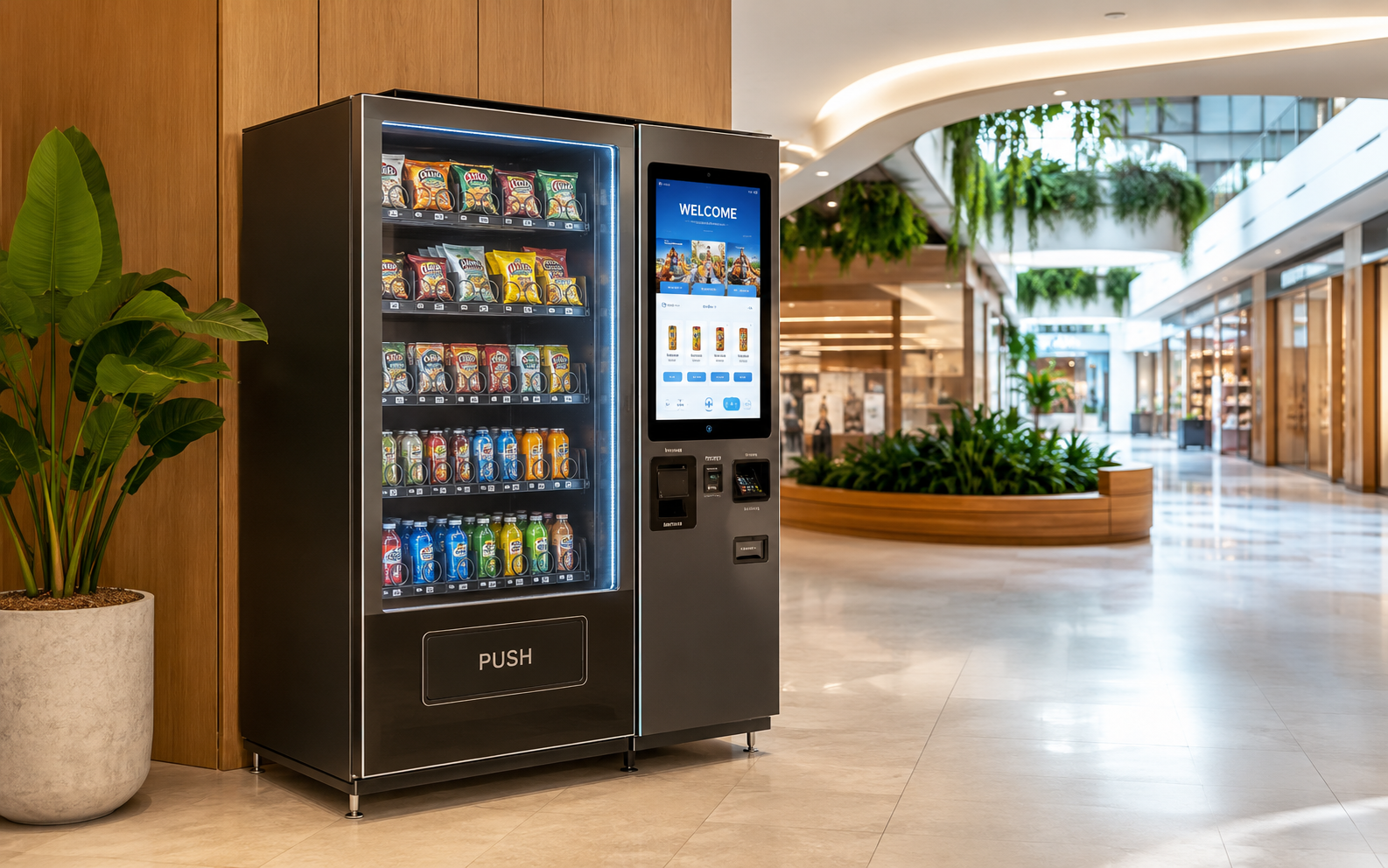
Modern vending machines often support multiple payment methods simultaneously, ensuring flexibility for a wide range of users.
Data Advantages of Cashless Systems
Beyond convenience, cashless payments provide valuable data insights.
Operators can track:
- Transaction frequency
- Purchase value
- Payment preferences
- Time-based sales trends
This data enables more informed decision-making in areas such as pricing, product selection, and machine placement.
Cash-based systems, by contrast, offer very limited visibility into customer behavior.
Improving Security and Reducing Risk
Cashless systems also enhance security.
Benefits include:
- Reduced risk of theft
- No need for cash collection
- Lower handling errors
For operators managing multiple machines, this significantly simplifies operations and reduces logistical challenges.
Customer Experience and Expectations
Today’s consumers expect payment systems to be:
- Fast
- Reliable
- Secure
- Easy to use
If a vending machine does not support modern payment methods, customers may simply walk away.
In competitive environments, providing a seamless payment experience is essential for retaining customers.
Challenges of Cashless Adoption
Despite its advantages, transitioning to cashless systems comes with challenges.
Hardware and Integration Costs
Upgrading machines to support digital payments requires investment in payment terminals and software integration.
Transaction Fees
Digital payments involve processing fees, which can impact margins if not managed carefully.
Connectivity Requirements
Cashless systems rely on stable internet connections. Poor connectivity can disrupt transactions.
Inclusion Considerations
While cashless adoption is growing, some users still rely on cash. Operators must decide whether to offer hybrid systems.
Hybrid Payment Models
Many operators are adopting hybrid systems that support both cash and cashless payments.
This approach:
- Maximizes accessibility
- Reduces lost sales opportunities
- Provides flexibility for different customer segments
However, as cash usage continues to decline, fully cashless models are becoming more viable.
The Future of Payments in Automated Retail
The payment landscape will continue to evolve alongside technology.
Future trends include:
- Biometric payments (fingerprint or facial recognition)
- Seamless app-based purchasing
- Subscription and loyalty-based payment systems
- Integration with digital ecosystems
As these innovations develop, vending machines will become even more integrated into the broader digital economy.
Conclusion
Cashless payments are transforming self-service vending machines into faster, more efficient, and more customer-friendly retail solutions.
For operators, the benefits go beyond convenience—cashless systems drive higher sales, provide valuable data insights, and reduce operational complexity.
In 2026 and beyond, embracing cashless technology is not just a competitive advantage—it is a fundamental requirement for success in automated retail.