Skip to content
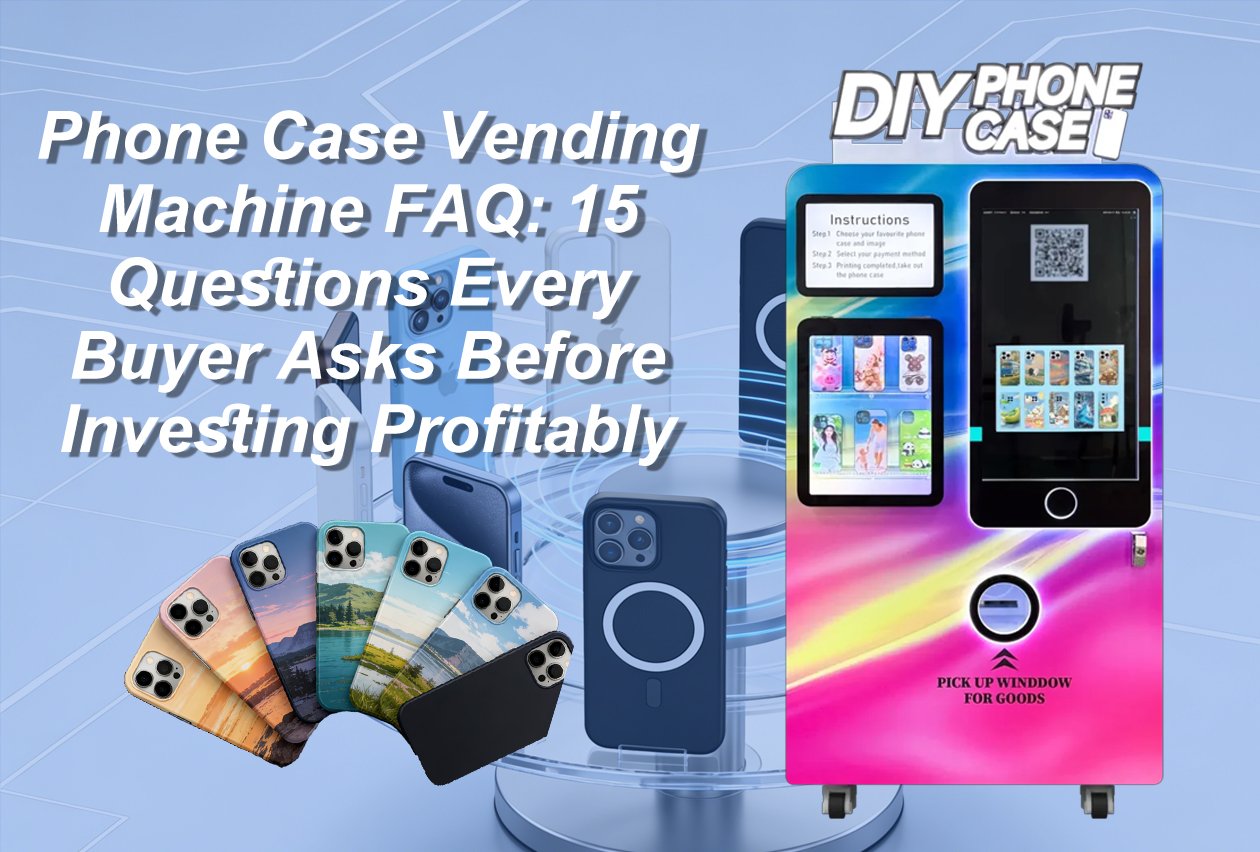
If you’re considering a phone case vending machine, chances are you’ve asked yourself a few key questions:
- How much does it cost?
- Is it profitable?
- Is it hard to maintain?
You’re not alone.
Almost every serious buyer goes through the same decision process.
In this article, we’ll answer the most common questions investors ask — clearly, honestly, and practically — so you can make a confident decision.
1. How much does a phone case vending machine cost?
Most machines fall within:
👉 $6,000 – $12,000
Additional costs may include:
- Shipping
- Installation
- Initial materials
Total startup estimate:
👉 $8,000 – $15,000
2. How much profit can I make per month?
It depends on location and performance.
Typical range:
- Low: ~$3,000/month
- متوسط: $5,000–$7,000/month
- High: $8,000+/month
3. What is the average selling price per case?
Most successful operators price at:
👉 $20–$40 per case
Why this works:
- Customers pay for customization
- Immediate production adds value
- Environment supports premium pricing
4. What is the cost per phone case?
Average cost:
👉 Around $5 per case
Includes:
- Blank case
- Ink
- Printing materials
5. How long does it take to print one case?
Typically:
👉 3–5 minutes per case
Why this matters:
- Fast enough for impulse purchases
- Short enough for waiting customers
6. Is it difficult to operate?
No.
Most machines are designed to be:
- User-friendly
- Automated
- Easy to manage
Basic tasks include:
- Refilling materials
- Checking machine status
- Cleaning
7. Does it require full-time staff?
👉 No
That’s one of the biggest advantages.
Compared to kiosks:
- No salaries
- No scheduling
- No staffing issues
8. Where are the best locations?
Top-performing locations include:
- Shopping malls
- Airports
- Entertainment centers
- Tourist areas
Key factor:
👉 Places where people pause and spend time
9. How long does it take to recover the investment?
Typical payback period:
- Conservative: 3–5 months
- Moderate: 2–3 months
- Strong location: 1–2 months
10. What happens if the machine breaks down?
Most issues are:
- Minor
- Easy to fix
- Supported remotely
Best practice:
- Choose a supplier with strong support
- Learn basic troubleshooting
11. Can I manage multiple machines?
👉 Yes — and this is where the real business starts.
With experience, operators can:
- Manage several locations
- Monitor machines remotely
- Scale efficiently
12. Do I need technical experience?
👉 No advanced skills required
You only need to:
- Understand basic operations
- Follow instructions
- Handle simple maintenance
13. Is the market saturated?
👉 Not yet
Current situation:
- Major cities: growing
- Mid-sized cities: open opportunity
- Smaller cities: largely untapped
14. Can I move the machine if a location doesn’t work?
👉 Yes
This is a major advantage:
- Flexible placement
- Lower risk
- Ability to optimize locations
15. What is the biggest factor for success?
If we simplify everything into one answer:
👉 Location + execution
Specifically:
- Good placement
- Clear pricing
- Strong design selection
- Reliable machine
Bonus Question: Is this business suitable for beginners?
👉 Yes — with the right mindset
Ideal for people who:
- Want a semi-automated business
- Prefer low overhead
- Are willing to learn basic operations
Not ideal for people who:
- Expect fully passive income
- Avoid involvement completely
- Ignore optimization
Conclusion: Clarity Leads to Better Decisions
Every investment starts with questions.
And in this business, the answers are surprisingly clear:
- Costs are manageable
- Margins are strong
- Operations are simple
- Scalability is real
But success doesn’t come from buying a machine.
It comes from:
- Understanding the model
- Making smart decisions
- Managing consistently
Once those pieces are in place, a phone case vending machine becomes more than a product.
👉 It becomes a predictable business system.