Skip to content
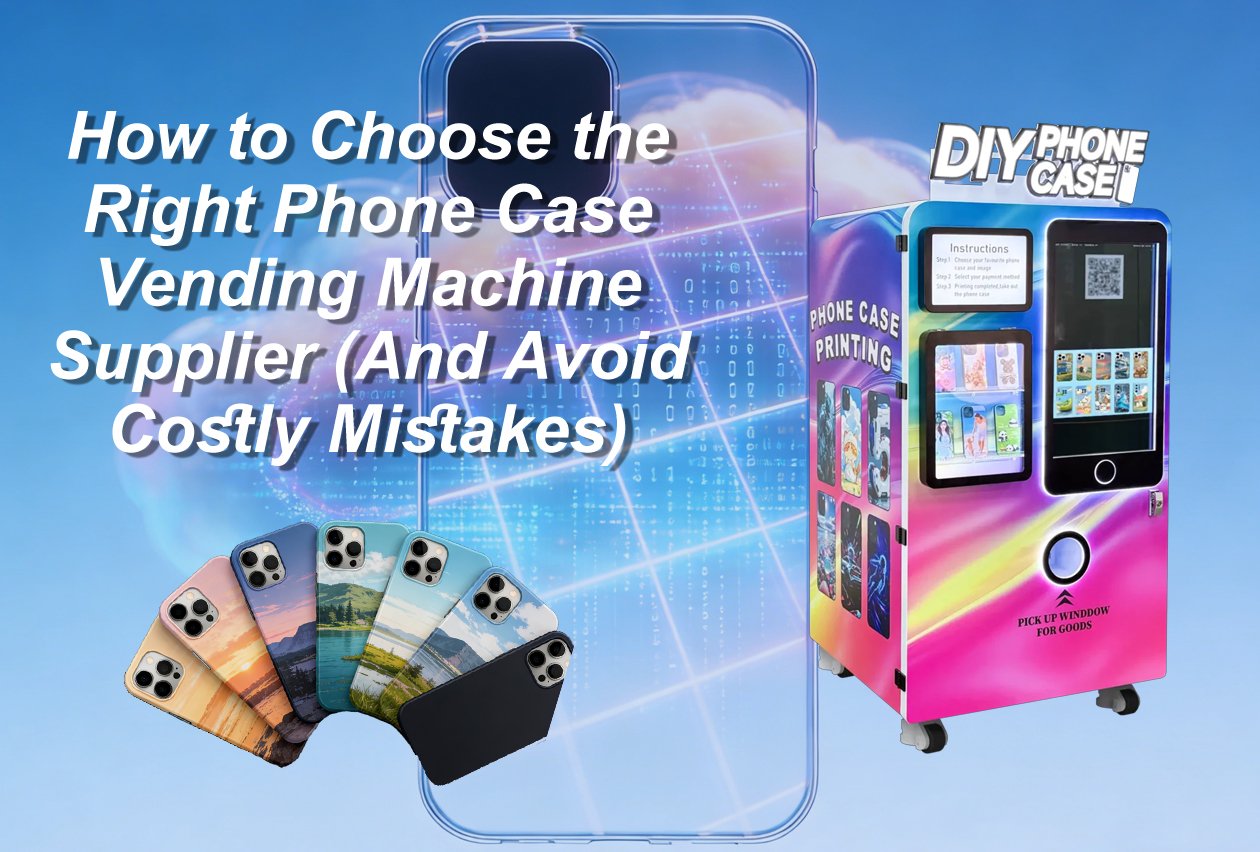
At some point, every serious investor reaches the same question:
“Where should I buy my phone case vending machine?”
It sounds like a simple step.
But in reality, choosing the wrong supplier is one of the most expensive mistakes you can make.
Why?
Because a phone case vending machine is not just a product.
It’s a long-term operating system that directly affects:
- Your daily revenue
- Your maintenance cost
- Your customer experience
- Your ability to scale
In this guide, we’ll break down exactly how to evaluate a supplier, what to avoid, and how experienced operators make confident decisions.
1. Understand What You’re Really Buying
Before comparing suppliers, you need to shift your mindset.
You are not buying:
- A printer
- A cabinet
- A screen
You are buying a complete retail solution.
A reliable supplier should provide:
- Stable hardware system
- Efficient printing technology
- User-friendly interface
- Remote monitoring capabilities
- Ongoing technical support
If a supplier focuses only on price or hardware specs, that’s your first warning sign.
2. Check the Core Technology (Not Just the Appearance)
Two machines can look identical on the outside — but perform completely differently inside.
One of the most critical factors is the printing system design.
What to Ask
- Does the machine use no-bracket printing technology?
- How is alignment handled?
- What is the failure rate?
- How long does each print take?
Why It Matters
Machines with complex mechanical structures tend to:
- Break down more often
- Require more maintenance
- Increase long-term cost
A simpler, more refined internal design is usually more reliable.
And reliability is what protects your income.
3. Evaluate Software and User Experience
Many buyers focus on hardware and ignore software — until it’s too late.
But from a customer’s perspective, the software is the business.
Key Questions to Ask
- Is the interface intuitive for first-time users?
- Does it support photo uploads easily?
- Can designs be updated remotely?
- Does it support multiple languages?
Why This Matters
A vending machine is a self-service experience.
If users feel confused or frustrated, they simply walk away.
A well-designed interface can increase conversion rate significantly without changing location or pricing.
4. Look at After-Sales Support (This Is Where Problems Show Up)
Every machine will eventually need support.
The difference is how quickly problems are solved.
Weak Suppliers
- Slow response time
- Limited technical knowledge
- No spare parts availability
- No remote diagnostics
Strong Suppliers
- Clear support channels
- Fast response time
- Remote troubleshooting
- Available replacement parts
Before buying, ask:
“If my machine stops working on a weekend, what happens?”
The answer will tell you everything.
5. Understand Real Maintenance Requirements
Some suppliers claim:
“No maintenance needed”
This is unrealistic.
Every vending machine requires basic upkeep.
What You Should Clarify
- How often does the machine need servicing?
- What parts wear out over time?
- Can you handle basic maintenance yourself?
- Are instructions and training provided?
Machines with simpler designs reduce:
- Maintenance time
- Technician dependency
- Unexpected costs
This becomes especially important when managing multiple machines.
6. Ask for Real Performance Data (Not Just Promises)
A reliable supplier should be able to provide:
- Real deployment cases
- Daily sales estimates by location type
- Typical ROI ranges
- Performance comparisons
Be cautious if you hear only:
- “High profit”
- “Fast return”
- “Easy business”
Without data, these claims mean nothing.
Good suppliers speak in numbers, not slogans.
7. Avoid Choosing Based Only on Price
This is one of the most dangerous mistakes.
A cheaper machine may save you a few thousand dollars upfront —
but cost much more over time.
Hidden Costs of Low-Quality Machines
- Frequent breakdowns
- Lost revenue during downtime
- Poor print quality
- Negative customer experience
- Limited scalability
In contrast, a reliable machine:
- Runs consistently
- Maintains quality
- Generates stable income
This is not a one-time purchase.
It’s a long-term asset.
8. Consider Scalability From Day One
Even if you start with one machine, you should think ahead.
Ask yourself:
- Can this supplier support multiple machines?
- Is there a centralized management system?
- Can designs and pricing be updated remotely?
A scalable system allows you to grow from:
1 machine → 3 machines → 10 machines
…without increasing complexity.
9. Communication and Transparency Matter More Than You Think
During the buying process, pay attention to how the supplier communicates.
Do they:
- Answer questions clearly?
- Provide detailed explanations?
- Acknowledge limitations honestly?
Or do they:
- Avoid technical details?
- Push for quick decisions?
- Focus only on closing the sale?
The way a supplier communicates before purchase is usually how they will behave after.
10. A Simple Supplier Evaluation Checklist
Before making a decision, make sure you can confidently answer:
- Is the technology reliable and modern?
- Is the user experience smooth and intuitive?
- Is after-sales support clearly defined?
- Are maintenance requirements reasonable?
- Is the pricing aligned with long-term value?
- Can this system scale with my business?
If any of these answers are unclear, pause.
A rushed decision here can affect your business for years.
The Right Supplier Is a Business Partner
Choosing a phone case vending machine supplier is not just a purchase decision.
It’s a partnership decision.
The right supplier helps you:
- Start smoothly
- Operate efficiently
- Scale confidently
The wrong one creates:
- Friction
- Uncertainty
- Ongoing cost
Take your time.
Ask the right questions.
Focus on long-term value, not short-term savings.
Because in this business, your supplier choice shapes your results more than any other factor.