Skip to content
In 2026, more entrepreneurs are turning their attention to automated retail—and for good reason. Self-service vending machines are no longer seen as a side business or passive income experiment. They are increasingly recognized as a scalable, data-driven investment model with relatively low operational complexity.
For small business owners, the appeal lies in a simple idea: build a retail presence without the heavy costs of traditional storefronts. But behind that simplicity is a growing ecosystem of technology, analytics, and flexible business strategies that make vending a serious commercial opportunity.
The Shift Toward Low-Overhead Business Models
Traditional retail comes with high barriers to entry. Renting a physical store, hiring staff, and managing daily operations require significant capital and ongoing expenses.
Self-service vending machines offer a different approach:
- No full-time staffing required
- Lower rent compared to retail stores
- Minimal day-to-day supervision
- Flexible placement across multiple locations
This low-overhead model allows entrepreneurs to start small and expand gradually.
For many first-time investors, it provides an accessible entry point into the retail industry.
Why Small Business Owners Are Paying Attention
1. Predictable and Repeatable Revenue
Once placed in a good location, a vending machine can generate steady daily sales with relatively stable demand.
Unlike some businesses that depend heavily on seasonal fluctuations, vending operations often benefit from consistent consumer behavior—especially in locations such as offices, residential buildings, and transportation hubs.
2. Scalability
One of the most attractive aspects of vending is scalability.
Operators can:
- Start with one or two machines
- Learn from initial performance
- Gradually expand to multiple locations
Each additional machine increases total revenue without significantly increasing complexity.
This makes vending an ideal model for incremental growth.
3. Flexible Time Commitment
Self-service vending machines do not require constant supervision.
Most operators focus on:
- Restocking
- Maintenance
- Performance monitoring
This allows business owners to manage vending operations alongside other ventures or full-time jobs.
4. Technology-Driven Efficiency
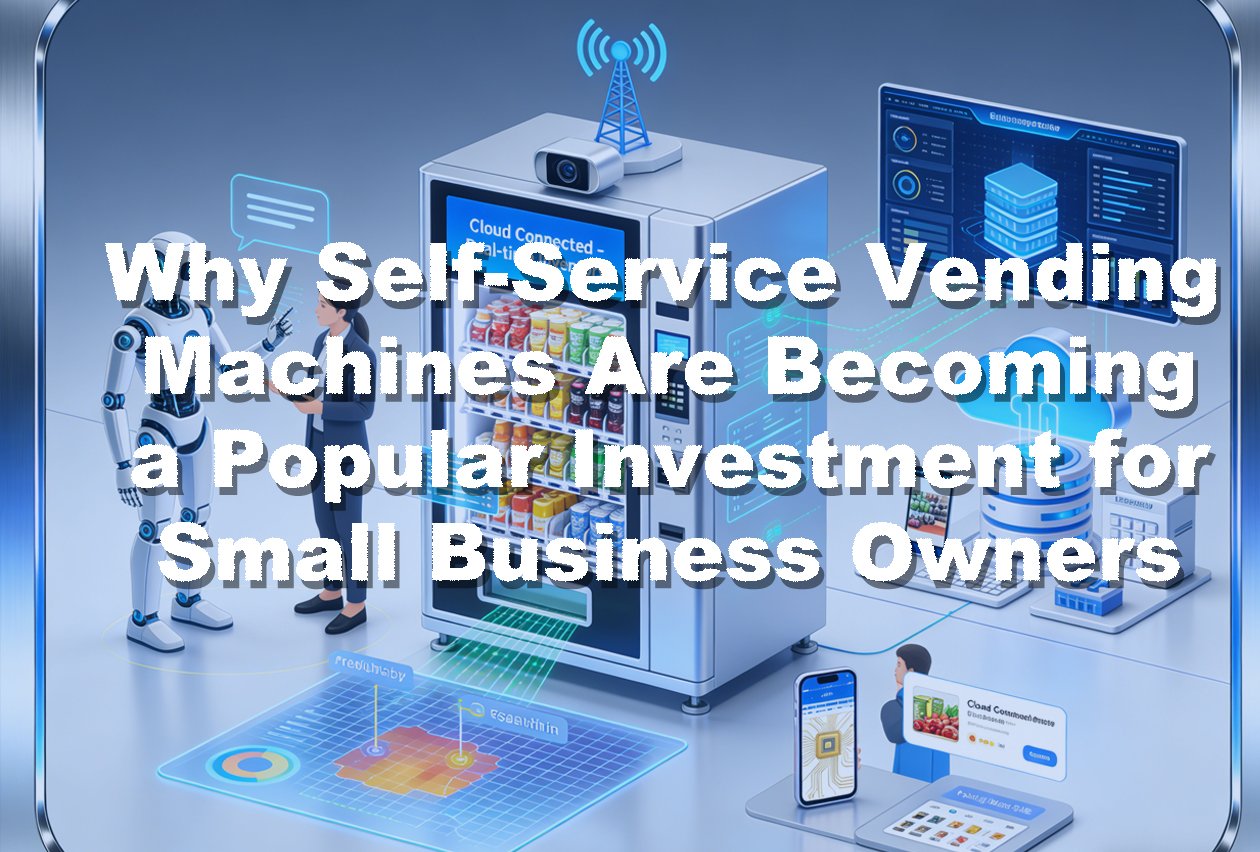
Modern vending machines are supported by cloud-based management systems.
These systems allow operators to:
- Track sales remotely
- Monitor inventory in real time
- Receive maintenance alerts
- Analyze location performance
With these tools, operators can make informed decisions without being physically present.
Understanding the Investment Structure
While vending machines require less capital than traditional retail, they are not “zero-cost” businesses.
Initial Investment
Costs typically include:
- Machine purchase
- Installation and setup
- Initial inventory
- Location agreements
The total investment varies depending on machine type and complexity.
Operating Costs
Ongoing expenses may include:
- Inventory replenishment
- Maintenance and repairs
- Location commissions or rent
- Payment processing fees
Effective cost management is essential for maintaining profitability.
Return on Investment (ROI)
ROI in vending depends heavily on:
- Location quality
- Product selection
- Pricing strategy
- Operational efficiency
Well-performing machines in high-traffic locations can achieve relatively fast payback periods, while poorly placed machines may struggle.
Successful operators continuously optimize performance rather than relying on initial setup alone.
Choosing the Right Locations
As highlighted in previous discussions, location plays a decisive role in vending success.
Small business owners should prioritize:
- High foot traffic areas
- Locations with limited retail competition
- Environments with consistent daily activity
Examples include:
- Office buildings
- Residential complexes
- Healthcare facilities
- Transportation hubs
Securing strong locations is often more important than choosing the most advanced machine.
Product Strategy Matters
Selecting the right products is key to maximizing revenue.
Operators should consider:
- Local demand
- Price sensitivity
- Product turnover rates
- Seasonal variations
Testing and adjusting product mixes over time is essential for long-term success.
Risks and Challenges
While vending offers many advantages, it is not risk-free.
Location Risk
A poor location can significantly reduce sales. Careful evaluation is necessary before placement.
Maintenance and Downtime
Technical issues can lead to lost revenue if machines are not functioning properly.
Reliable equipment and regular maintenance are critical.
Competition
As automated retail grows, competition for premium locations is increasing.
Operators must differentiate through product selection, pricing, and service quality.
Learning Curve
New operators may need time to understand:
- Inventory management
- Consumer behavior
- Data analysis
Success often comes from continuous improvement rather than immediate results.
The Role of Data in Scaling
One of the biggest advantages of modern vending businesses is access to data.
Operators can use performance insights to:
- Identify high-performing locations
- Remove or relocate underperforming machines
- Optimize pricing and product selection
Data-driven decision-making allows small operators to compete more effectively and scale with confidence.
Future Outlook for Vending Investment
The vending machine industry is expected to continue growing as:
- Labor costs increase
- Consumer demand for convenience rises
- Technology improves
Self-service vending machines will likely become more integrated into everyday environments, creating additional opportunities for small business owners.
As automated retail becomes more mainstream, early adopters who build strong location networks and operational expertise will have a competitive advantage.
Conclusion
Self-service vending machines are evolving into a practical and scalable investment model for small business owners. With lower overhead, flexible management, and strong growth potential, automated retail offers a compelling alternative to traditional business models.
However, success requires more than simply placing machines. Strategic location selection, smart product choices, and ongoing optimization are essential.
For entrepreneurs willing to approach vending as a data-driven business rather than a passive income shortcut, the opportunities in 2026 and beyond are significant.