Skip to content
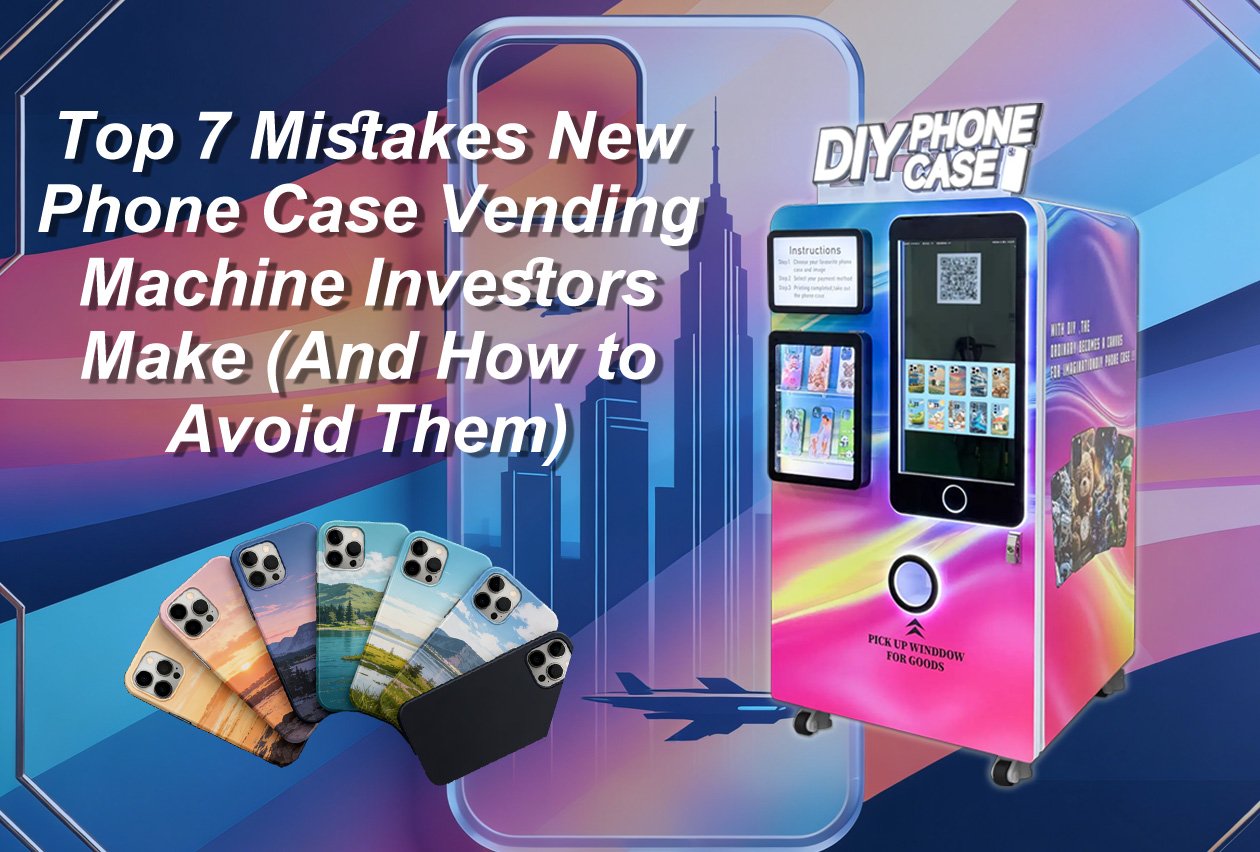
Starting a phone case vending machine business looks simple from the outside.
Buy a machine.
Place it in a good location.
Start earning.
But in reality, the difference between a machine that generates steady monthly profit and one that struggles to break even often comes down to a few critical decisions made at the beginning.
After observing operators across shopping malls, airports, and entertainment venues, one pattern becomes clear:
Most failures are not caused by the business model — but by avoidable mistakes.
In this article, we’ll walk through the 7 most common mistakes new investors make, and more importantly, how to avoid them.
1. Choosing Location Based Only on Foot Traffic
This is the most common misunderstanding.
Many beginners assume:
“More people = more sales”
But high foot traffic does not guarantee conversions.
What Actually Matters
- Do people stop here?
- Are they waiting or rushing?
- Are they relaxed or focused on something else?
A busy transit corridor may have thousands of people passing by, but almost none will stop.
Smarter Approach
Choose locations where people naturally pause:
- Cinema entrances
- Food courts
- Waiting areas
- Entertainment zones
The goal is not exposure.
It’s engagement.
2. Underpricing the Product
Another major mistake is setting prices too low out of fear.
New operators often think:
“Lower price = more sales”
But in vending environments, the opposite is often true.
Why Low Pricing Hurts
- Reduces perceived value
- Attracts price-sensitive buyers
- Requires higher volume to break even
Better Strategy
Position your product as:
- Personalized
- Instant
- Experience-driven
A price range of $20–$40 is widely accepted in malls and tourist areas.
Customers are not just buying a phone case.
They are buying a custom experience.
3. Ignoring Machine Reliability
Many buyers focus on appearance and features, but ignore internal structure.
This leads to one of the most expensive mistakes:
Downtime.
What Happens When a Machine Fails
- Lost daily revenue
- Poor customer experience
- Location dissatisfaction
- Increased maintenance cost
What to Look For
- Stable printing system
- Simple internal mechanics
- Low failure rate design
- Easy maintenance access
A reliable machine doesn’t just reduce stress —
it protects your income.
4. Poor Placement Inside the Location
Even inside a good venue, placement matters more than most people realize.
Two machines in the same mall can perform completely differently depending on visibility.
Weak Placement Examples
- Hidden corners
- Behind pillars
- Low-light areas
- Areas with blocked sightlines
Strong Placement Strategy
- Near natural traffic flow
- Visible from multiple angles
- Close to waiting zones
- Open, well-lit areas
A vending machine should attract attention without effort.
5. Offering Generic or Outdated Designs
Design selection directly affects conversion.
Many operators make the mistake of:
- Using outdated templates
- Offering limited customization
- Ignoring trends
Why This Matters
Customers interact with the screen before they decide to buy.
If the design options feel boring, they leave.
Better Approach
- Regularly update design library
- Include trending styles
- Offer photo upload options
- Keep interface intuitive
The machine is not just a printer.
It’s a digital storefront.
6. Overestimating Passive Income
Yes, phone case vending machines are automated.
But that doesn’t mean zero involvement.
Some new investors expect:
“Set it up and forget it”
This mindset leads to:
- Missed maintenance issues
- Low inventory awareness
- Poor performance tracking
Realistic Expectation
Successful operators:
- Check machines regularly
- Monitor sales data
- Refill inventory on time
- Adjust pricing and designs
It’s low-maintenance — not no-maintenance.
7. Expanding Too Quickly Without Validation
After seeing early success, some operators rush to scale.
They buy multiple machines before fully understanding:
- Location performance
- Customer behavior
- Maintenance needs
Risk of Scaling Too Fast
- Increased operational complexity
- Cash flow pressure
- Inconsistent results
Smarter Growth Strategy
- Optimize one machine first
- Understand your best-performing location
- Build a repeatable model
- Scale gradually
Growth should follow data, not excitement.
8. The Pattern Behind All These Mistakes
If you look closely, all seven mistakes share a common theme:
Assumptions instead of strategy.
Successful operators don’t rely on guesswork.
They observe, test, and refine.
They understand that this business is a combination of:
- Retail psychology
- Location strategy
- Pricing discipline
- Operational consistency
9. What Successful Operators Do Differently
Instead of chasing shortcuts, experienced operators focus on:
- High-quality locations
- Strong pricing strategy
- Reliable equipment
- Continuous optimization
They treat each machine as a small but scalable business unit, not a passive gadget.
Conclusion: Avoiding Mistakes Is Faster Than Fixing Them
The phone case vending machine business has strong profit potential.
But success depends less on luck and more on avoiding predictable errors.
If you can:
- Choose the right location
- Price with confidence
- Maintain machine reliability
- Optimize placement and design
You dramatically increase your chances of success.
In this business, small decisions create large outcomes.
Make them count.