Skip to content
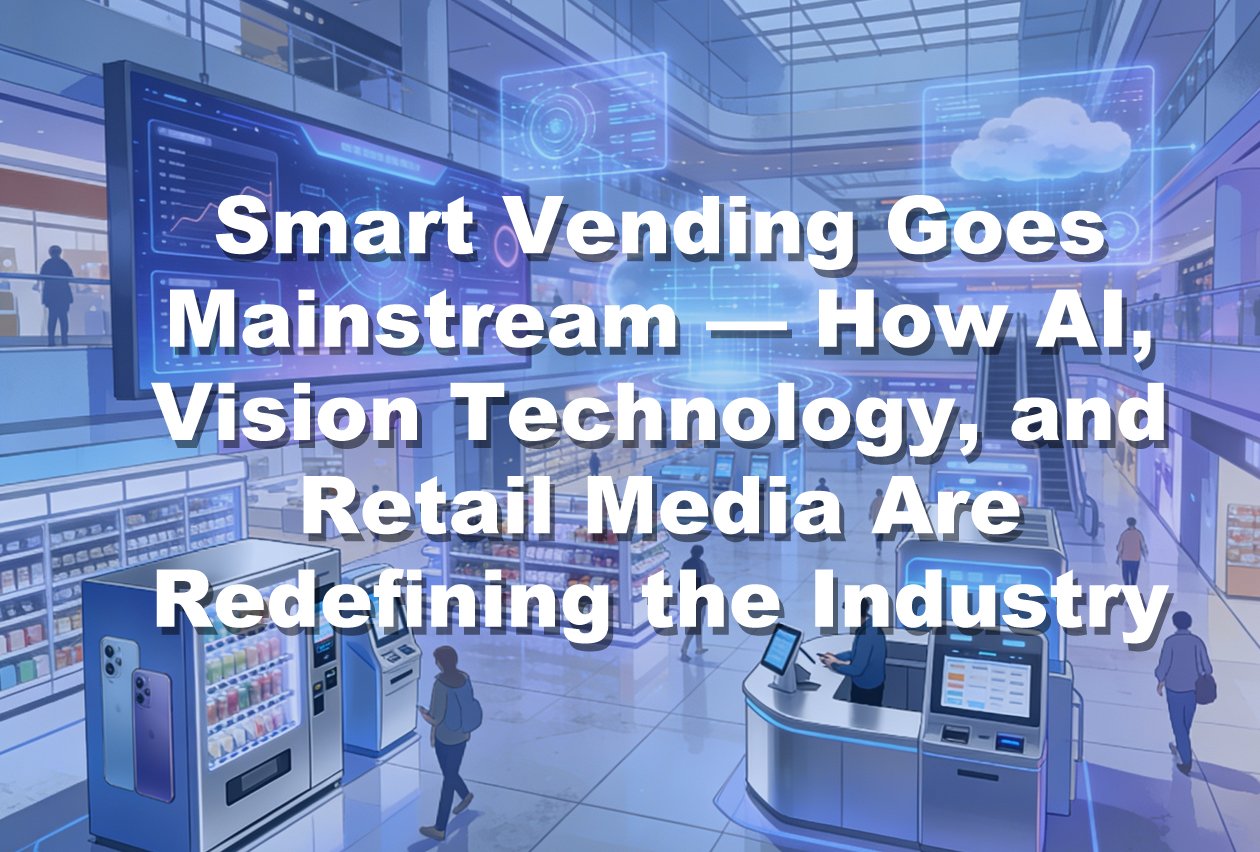
The vending machine industry is no longer operating quietly in the background of retail. In 2026, smart vending has become a focal point for innovation across AI, IoT, fintech, and digital advertising. What was once a coin-operated snack box is now a connected retail terminal — capable of collecting data, delivering personalized experiences, and generating recurring revenue streams far beyond product margins.
For operators, distributors, and solution providers, this shift is not incremental — it’s structural. Let’s explore the most important developments shaping the vending machine ecosystem right now and what they mean for long-term strategy.
1. AI Vision Vending: The Rise of Grab-and-Go Intelligence
Cashierless retail technology is no longer limited to high-budget convenience stores. Inspired by the model popularized by Amazon Go, AI vision vending cabinets are now entering airports, corporate campuses, universities, and hospitals at scale.
These machines use:
- Computer vision cameras
- Weight sensors
- Edge computing chips
- Cloud-based AI models
Customers simply open the door, take items, and close it. The system automatically detects product removal and charges the linked payment method.
Why This Matters for Operators
- Higher ticket value (multiple items per transaction)
- Reduced shrinkage
- Real-time inventory tracking
- Data on product interaction behavior
Unlike traditional vending, operators now gain insights into:
- Which products customers pick up but return
- Time spent browsing
- Cross-selling behavior
This behavioral data transforms vending from passive retail into an intelligent sales channel.
2. Retail Media Networks: The Hidden Revenue Multiplier
Another major shift in 2026 is the integration of vending machines into retail media networks.
Large consumer brands are reallocating ad budgets away from traditional banner ads toward in-store digital displays — and vending machines are becoming micro advertising hubs.
Major beverage brands like Coca-Cola and PepsiCo are experimenting with:
- Dynamic screen promotions
- Time-of-day pricing ads
- Sponsored product placements
- QR-based loyalty activations
For vending operators, this creates a second revenue layer:
Product sales + advertising revenue
In high-traffic environments (airports, train stations, shopping malls), digital display screens can generate meaningful CPM-based income.
The key trend?
Vending machines are becoming “Retail Media Nodes” — part of the broader omnichannel marketing ecosystem.
3. Contactless Is Standard — But Biometric Payments Are Emerging
Contactless card and mobile wallet payments are now baseline expectations. But what’s new in 2026 is biometric authentication inside vending ecosystems.
Technologies include:
- Facial recognition (opt-in membership models)
- Palm recognition systems similar to Amazon’s biometric experiments
- App-based auto-authentication through Bluetooth proximity
Biometric payment isn’t replacing cards yet — but it is gaining traction in:
- Corporate campuses
- University dorms
- High-security facilities
For vending operators, biometric integration offers:
- Faster checkout
- Loyalty program integration
- Identity-based dynamic pricing
Privacy and compliance remain critical considerations, but the momentum is undeniable.
4. Sustainability Becomes a Competitive Differentiator
Sustainability is no longer a marketing tagline — it’s influencing procurement decisions.
Corporate clients are now asking vending suppliers about:
- Energy efficiency ratings
- Refrigerant type (low-GWP gases)
- Recyclable machine materials
- Carbon reporting capability
Companies such as Crane NXT are pushing next-generation energy-optimized refrigeration systems that significantly reduce operational costs.
Additionally, refill-based vending systems and bulk dispensing formats are gaining traction, especially in eco-conscious urban markets.
Operators who can quantify their carbon savings now hold a strong competitive advantage in B2B negotiations.
5. Data Is the New Competitive Moat
Perhaps the most transformative trend is data centralization.
Modern vending management systems now provide:
- Real-time sales dashboards
- Predictive restocking alerts
- Location performance benchmarking
- SKU-level analytics
With AI forecasting models, operators can:
- Reduce out-of-stock incidents
- Optimize product mix per location
- Adjust pricing dynamically
This is especially critical in high-rent environments where machine placement costs are significant.
Data maturity now separates small operators from scalable vending networks.
6. Micro-Markets vs. Smart Vending: Complement, Not Competition
There has been ongoing debate about whether micro-markets will replace vending machines.
In reality, the market is segmenting.
Micro-markets dominate large office environments. Smart vending excels in:
- Transportation hubs
- Hospitals
- Hotels
- Apartment complexes
- 24/7 access zones
Many operators are adopting hybrid strategies — combining:
- Open shelving
- Smart coolers
- Traditional vending towers
The winning model isn’t either/or. It’s flexible retail architecture.
7. International Expansion and Localization
Emerging markets in Southeast Asia, the Middle East, and parts of Europe are accelerating vending deployment due to:
- Labor shortages
- High real estate costs
- Urban density growth
Smart vending is particularly appealing in regions with high smartphone penetration and digital wallet adoption.
Localization remains critical:
- Language interface
- Payment methods
- Product mix adaptation
The global vending market is fragmenting into tech-forward ecosystems — and operators who can scale across borders will lead the next decade.
Strategic Takeaways for 2026
- AI vision vending is moving from experimental to mainstream.
- Retail media integration adds non-product revenue streams.
- Biometric authentication is emerging in closed ecosystems.
- Sustainability reporting influences contract decisions.
- Data analytics is the primary driver of profitability.
- Hybrid models outperform single-format strategies.
- International growth requires localized intelligence.
The vending machine industry is no longer about hardware — it’s about platforms, ecosystems, and recurring revenue.
For business owners and distributors, the question isn’t whether to adopt smart vending technology.
The question is how quickly you can integrate it into your operational DNA.