Skip to content
If you walk through a shopping mall today, you’ll notice something interesting.
Traditional phone case kiosks are disappearing.
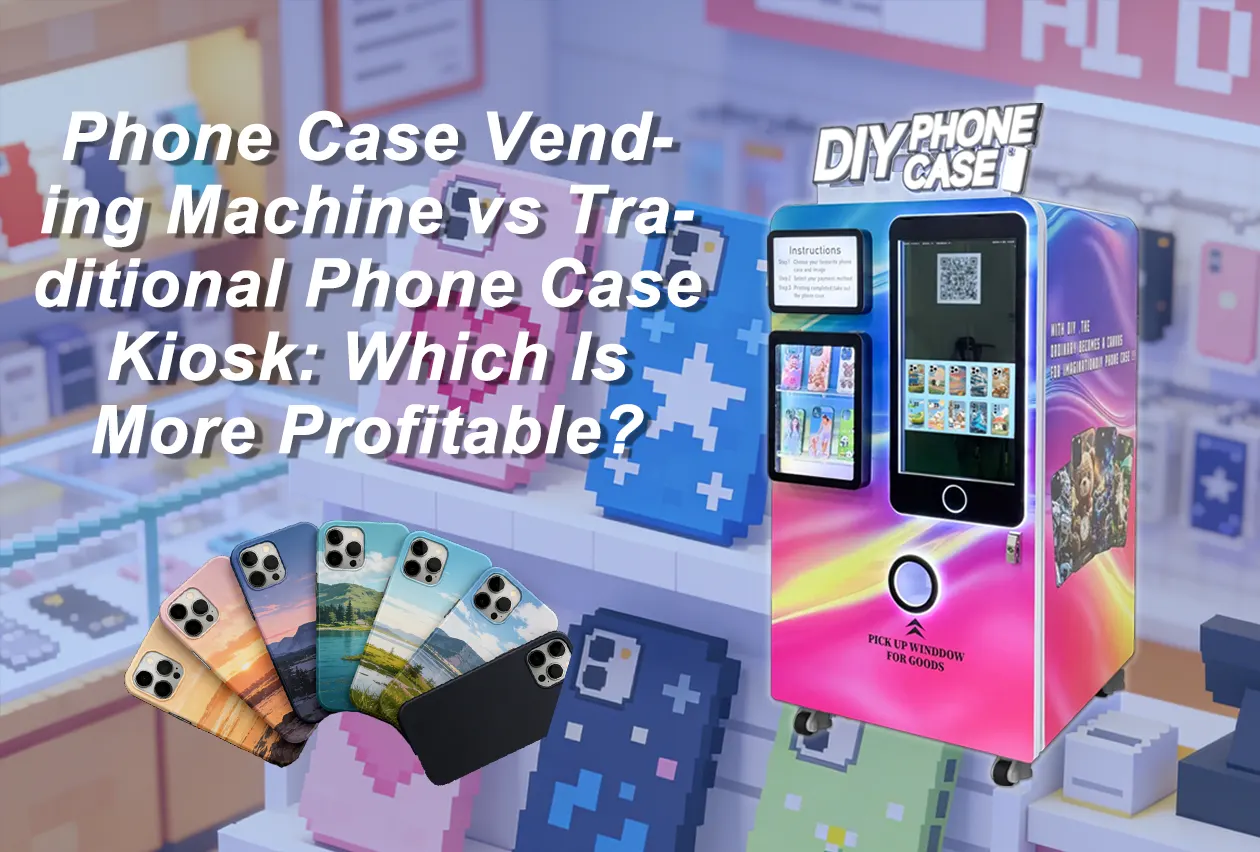
In their place, phone case vending machines are quietly taking over high-traffic areas.
This isn’t a coincidence.
Mall operators, investors, and brand owners are making a clear choice—not based on novelty, but on profitability, efficiency, and long-term sustainability.
In this article, we’ll compare phone case vending machines vs traditional phone case kiosks from a real business perspective and answer one key question:
Which model actually makes more money in 2025 and beyond?
1. Business Model Overview: Automation vs Labor
Before comparing numbers, let’s clarify how these two models fundamentally operate.
Traditional Phone Case Kiosk
- Staffed 10–12 hours per day
- Limited customization options
- Inventory-heavy
- Sales depend on salesperson performance
Phone Case Vending Machine
- Fully automated, 24/7 operation
- On-demand custom printing
- Minimal inventory
- Sales driven by user experience and impulse behavior
Right from the start, these models operate under completely different cost structures.
2. Labor Cost: The Silent Profit Killer
Labor is the biggest weakness of traditional kiosks.
Traditional Kiosk Labor Reality
- 1–2 employees per shift
- Monthly wages + insurance
- Sick leave, turnover, training
- Human error and inconsistent service
Even in lower-cost regions, labor can consume 30–50% of gross revenue.
Vending Machine Advantage
- Zero staff
- No training
- No scheduling
- No human dependency
A phone case vending machine replaces years of recurring labor expenses with a one-time investment.
This alone explains why many mall owners now prefer automated solutions.
3. Rent and Space Efficiency: Smaller Footprint, Bigger Returns
Shopping malls price space by square meter and visibility.
Traditional Kiosk
- Requires larger area
- Needs open counter space
- Visual clutter (inventory, staff, displays)
- Higher monthly rent
Phone Case Vending Machine
- Compact footprint
- Vertical design
- Clean, modern appearance
- Easier approval from mall management
In premium malls, smaller footprint = easier placement = better locations.
Better location directly leads to:
- Higher foot traffic
- Higher impulse conversion
- Higher average selling price
4. Inventory Pressure: Stock vs Smart Production
Inventory is another hidden cost many beginners underestimate.
Kiosk Inventory Problems
- Hundreds of phone models & colors
- Dead stock risk
- Capital tied up
- Trend-dependent designs
Unsold cases don’t just take space—they lock up cash.
Vending Machine Model
- Blank cases only
- On-demand printing
- Digital design library
- No finished-goods stock
This means:
- Faster cash turnover
- Less risk
- Easier scaling
You’re selling ideas and personalization, not physical stock.
5. Revenue Comparison: Who Really Wins?
Let’s compare realistic daily performance in a shopping mall.
Traditional Phone Case Kiosk
- Average daily sales: 10–20 units
- Average price: $10–$15
- Daily revenue: $150–$250
- Net profit after costs: often under $80/day
Phone Case Vending Machine
- Average daily sales: 15–30 units
- Average price: $25–$30
- Daily revenue: $375–$900
- Net margins: 70–90%
Even with fewer interactions, vending machines often generate higher net profit.
Why?
Because every dollar earned is not diluted by labor and excess overhead.
6. Customer Psychology: Why Automation Sells Better
Customers behave differently when interacting with machines.
Kiosk Interaction
- Social pressure
- Sales resistance
- Time commitment
- Inconsistent service quality
Vending Machine Interaction
- Private
- Fast
- Fun
- Tech-driven experience
Watching a phone case being printed live creates:
- Curiosity
- Trust
- Shareable moments
- Higher perceived value
This is why customers willingly pay $20–$40 at a vending machine without negotiation.
7. Operating Hours: 24/7 vs Limited Time
Traditional kiosks stop earning when staff leave.
Phone case vending machines don’t.
Why This Matters
- Evening foot traffic
- Weekend surges
- Holiday peaks
- Late-night impulse buyers
Many operators report that 30–40% of sales happen outside traditional working hours.
That revenue simply doesn’t exist for staffed kiosks.
8. Maintenance & Management: Which Is Easier to Scale?
Kiosk Scaling Problems
- Hiring more staff
- Managing schedules
- Quality inconsistency
- Higher operational stress
Vending Machine Scaling Logic
- Centralized cloud monitoring
- Unified pricing
- Remote updates
- Standardized consumables
One operator can manage multiple machines across different locations with minimal effort.
That’s real scalability.
9. Why Malls Are Actively Replacing Kiosks with Vending Machines
Mall management cares about:
- Clean aesthetics
- Stable operation
- Low complaints
- Modern image
Phone case vending machines check all boxes:
- No staff disputes
- No messy counters
- No loud selling
- High-tech appeal
This is why malls increasingly prioritize vending solutions over traditional kiosks.
Day 8 Conclusion: Automation Is Not the Future — It’s the Present
Traditional phone case kiosks are not “bad.”
They’re simply outdated.
Phone case vending machines win because they:
- Reduce costs
- Increase margins
- Improve customer experience
- Scale effortlessly
If profitability, efficiency, and long-term growth matter to you, the comparison is clear.