Skip to content
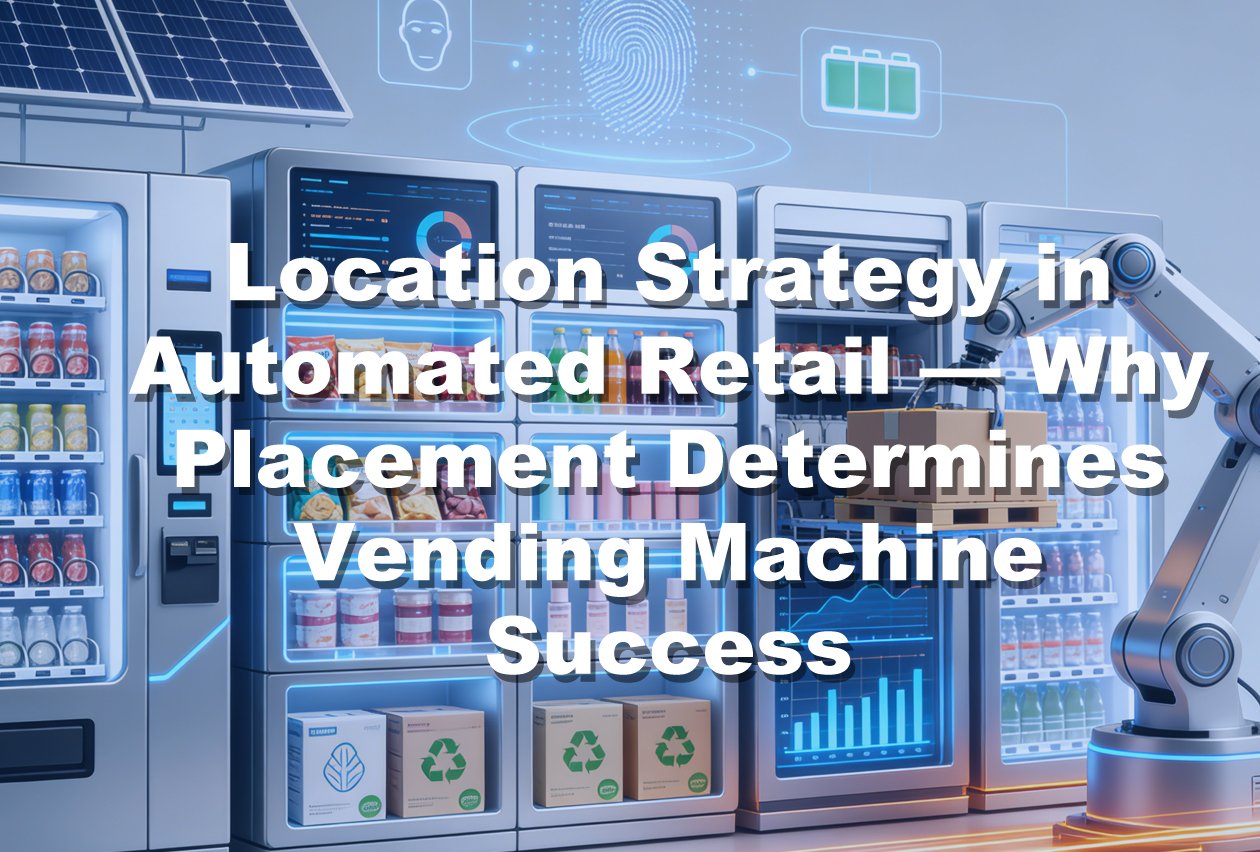
In the automated retail industry, technology matters, product selection matters, and pricing matters—but none of these factors outweigh one critical element: location.
For self-service vending machines, location is the foundation of profitability. A well-placed machine can generate consistent revenue with minimal intervention, while a poorly chosen location can struggle regardless of product quality or advanced features.
As automated retail expands in 2026, operators are shifting their focus from simply deploying machines to strategically selecting and optimizing locations. Understanding how location impacts performance is now essential for long-term success.
Why Location Matters More Than Ever
Unlike traditional retail stores, self-service vending machines rely heavily on foot traffic and situational demand. There are no sales associates to attract customers, no window displays to draw attention, and no upselling at checkout.
The machine itself must capture attention and convert interest into purchases.
This makes location the most important factor influencing:
- Sales volume
- Customer engagement
- Product turnover
- Return on investment
In automated retail, location is not just a factor—it is the strategy.
The Core Elements of a High-Performing Location
Successful vending operators evaluate locations based on several key criteria.
1. Foot Traffic Volume
High foot traffic increases exposure, but not all traffic is equal. Operators must consider:
- Daily visitor count
- Peak traffic hours
- Flow patterns (pass-through vs. dwell areas)
Locations where people naturally pause—such as waiting areas or entrances—often perform better than fast-moving walkways.
2. Dwell Time
Dwell time refers to how long people stay in a specific area. Longer dwell times create more opportunities for engagement and purchasing.
High dwell-time locations include:
- Transportation waiting zones
- Office lounges
- residential lobbies
- charging stations
- hospital waiting areas
When consumers have time to browse, they are more likely to make impulse purchases.
3. Audience Match
A successful location must align with the target customer profile.
Operators should consider:
- Age group
- Income level
- Lifestyle habits
- Purchasing behavior
For example:
- Office workers may prefer convenience items
- Travelers may need accessories or essentials
- Residents may look for everyday products
Matching products to the audience significantly improves sales performance.
4. Accessibility and Visibility
Even in high-traffic areas, poor placement can reduce performance.
Machines should be:
- Clearly visible
- Easy to access
- Positioned near natural pathways
- Well-lit and unobstructed
A machine placed behind a column or in a hidden corner will struggle to attract attention, regardless of location quality.
Top Performing Location Categories in 2026
Certain environments consistently deliver strong results for self-service vending machines.
Transportation Hubs
Airports, train stations, and metro systems offer:
- Continuous traffic
- Diverse customer profiles
- Strong demand for convenience
These locations are especially effective for products that serve immediate needs.
Office Buildings
Corporate environments provide:
- Stable daily traffic
- Predictable purchasing patterns
- High repeat usage
Self-service vending machines in offices benefit from regular customers and consistent demand.
Residential Communities
Modern residential developments are becoming key growth areas.
Residents value:
- Convenience
- Time savings
- On-demand access to products
Machines placed in apartment lobbies or shared spaces can generate steady daily sales.
Healthcare Facilities
Hospitals operate 24/7 and serve both staff and visitors.
These locations offer:
- Continuous demand
- Long dwell times
- Limited alternative retail options
This makes them ideal for automated retail deployment.
Shopping Centers
Shopping malls remain strong locations for vending machines, especially in common areas where traditional retail coverage is limited.
Machines can fill gaps between stores and capture impulse purchases from passing shoppers.
Data-Driven Location Optimization
Modern vending operators no longer rely solely on intuition when selecting locations.
Technology now allows for:
- Traffic data analysis
- Sales performance tracking
- Location comparison across multiple sites
By analyzing performance metrics, operators can:
- Relocate underperforming machines
- Adjust product offerings
- Identify high-growth areas
Data-driven decision-making reduces risk and improves overall profitability.
The Role of Partnerships
Securing high-quality locations often requires collaboration with property owners, developers, and facility managers.
Successful operators focus on building partnerships by offering:
- Revenue-sharing models
- Reliable maintenance and service
- Clean and well-maintained equipment
- Data insights on consumer behavior
Strong relationships can lead to long-term placement agreements and expansion opportunities.
Common Location Mistakes to Avoid
Even experienced operators can make mistakes when selecting locations.
Overestimating Foot Traffic
High traffic does not always translate to high sales. Fast-moving crowds may not convert into buyers.
Ignoring Demographics
A mismatch between product selection and audience can significantly reduce performance.
Poor Placement Within a Location
Even the best location can fail if the machine is placed in a low-visibility area.
Lack of Performance Monitoring
Without data tracking, operators may continue operating in underperforming locations longer than necessary.
Future Trends in Location Strategy
Location strategy will continue to evolve alongside technology.
Emerging trends include:
- AI-powered site selection tools
- Integration with smart building systems
- Real-time location performance analytics
- Dynamic relocation strategies
As automated retail becomes more competitive, precision in location planning will become a major differentiator.
Conclusion
In the world of self-service vending machines, location is not just important—it is everything. The success of an automated retail operation depends heavily on choosing the right place, understanding the audience, and continuously optimizing performance.
As the industry grows and competition increases, operators who invest in strategic location planning and data-driven decision-making will be best positioned to succeed.
In 2026 and beyond, the most profitable vending businesses will not necessarily have the most machines—but the best locations.