Skip to content
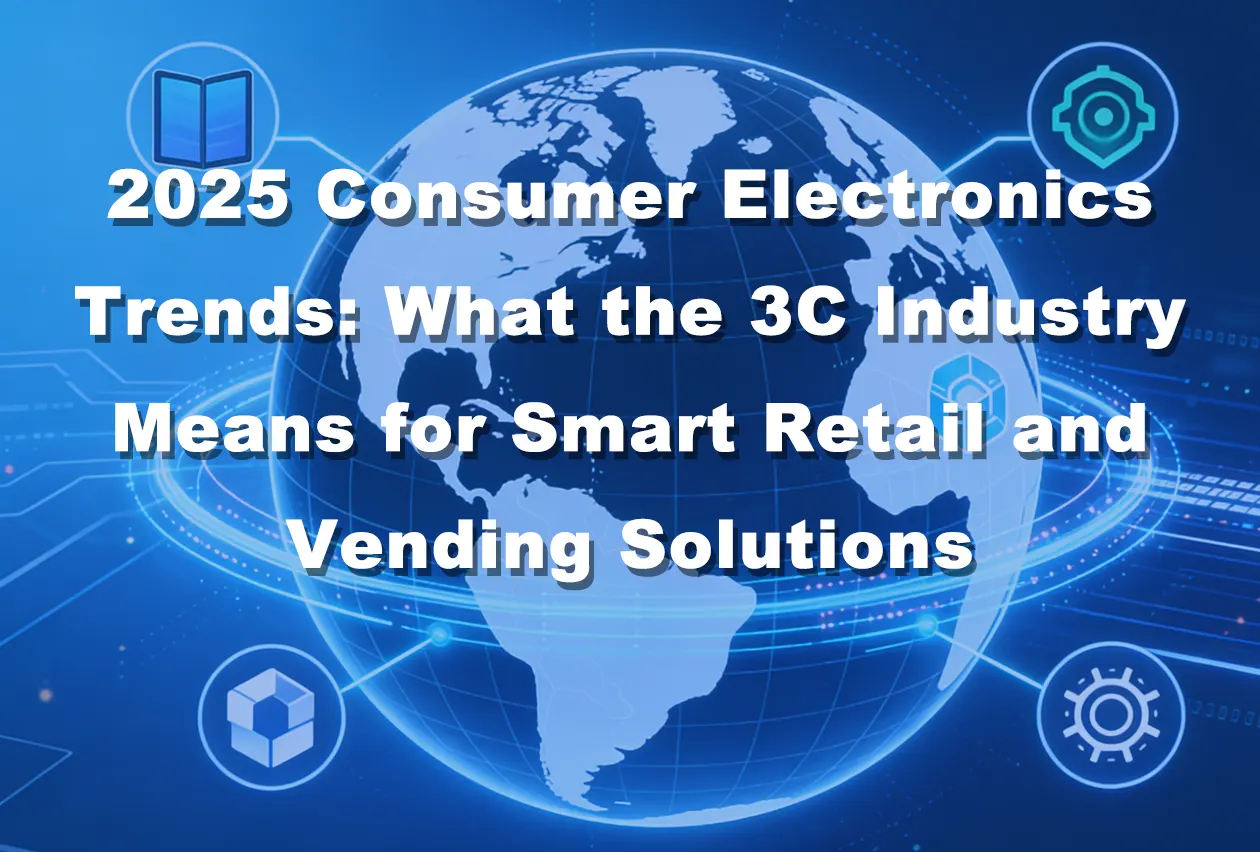
The 3C electronics industry is moving faster than ever. In 2025, innovation cycles are shortening, consumer expectations are evolving rapidly, and global market dynamics are being reshaped by new technologies, supply chain shifts, and emerging business models.
From artificial intelligence–powered devices to the acceleration of smart retail and automation, the latest developments in the 3C sector are not isolated news events. Together, they signal a broader transformation of how electronics are designed, distributed, and used.
In this article, we explore the most talked-about news and trends currently shaping the global 3C electronics industry, and what they mean for businesses, distributors, and technology-driven retail solutions.
AI Becomes the Center of Consumer Electronics Innovation
One of the most dominant themes in recent 3C industry news is the deep integration of artificial intelligence into consumer electronics.
Smartphones, wearables, and smart home devices are no longer just “connected”—they are becoming context-aware and adaptive. AI chips and on-device processing are now standard features in flagship electronics, enabling:
- Real-time image and voice recognition
- Personalized user experiences
- Improved energy efficiency
- Faster local data processing without cloud dependency
This shift toward AI-enabled hardware is also influencing commercial electronics. Automated retail machines, kiosks, and self-service terminals are increasingly equipped with intelligent systems capable of analyzing user behavior and optimizing performance autonomously.
Supply Chain Restructuring Remains a Major Industry Focus
Another hot topic across global electronics news is supply chain realignment. In response to geopolitical factors, logistics costs, and risk management concerns, many electronics brands are rethinking their manufacturing and sourcing strategies.
Key developments include:
- Greater diversification of manufacturing locations
- Increased investment in automation and smart factories
- Closer integration between hardware design and production
For distributors and B2B buyers, these changes impact:
- Lead times
- Pricing stability
- Product availability
Companies that understand supply chain trends can better anticipate market fluctuations and make more informed purchasing decisions.
Sustainability Moves from Marketing to Regulation
Sustainability is no longer just a branding message—it is becoming a regulatory and operational requirement.
Recent industry news highlights growing pressure on electronics manufacturers to:
- Reduce energy consumption
- Use recyclable materials
- Extend product life cycles
- Improve repairability
Energy-efficient components and modular design are gaining attention across the 3C sector. For smart retail and automated machines, this trend aligns with lower operating costs and improved long-term ROI.
Businesses that prioritize sustainable electronics are better positioned to meet future compliance standards and consumer expectations.
Smart Retail and Unmanned Stores Gain Global Momentum
Automated retail continues to attract global attention, driven by labor shortages, rising operating costs, and changing consumer habits.
Recent developments show:
- Increased deployment of smart vending machines
- Growth of unmanned convenience stores
- Expansion of self-service kiosks in public spaces
These solutions rely heavily on advanced consumer electronics, including touchscreens, sensors, communication modules, and embedded computing systems.
The success of smart retail models demonstrates how 3C technology is reshaping traditional retail structures—making them more flexible, scalable, and data-driven.
Payment Technology Innovation Accelerates Adoption
Another frequently discussed topic in electronics and retail news is payment innovation.
Consumers increasingly expect frictionless transactions, and electronics manufacturers are responding by integrating:
- Contactless payment systems
- Mobile wallet compatibility
- QR-based payment solutions
For automated retail, payment reliability is critical. A smooth, fast payment process directly influences customer trust and purchase completion rates.
As payment technologies continue to evolve, smart machines that support multiple payment options gain a clear competitive advantage.
Hardware Meets Software: The Rise of Platform-Based Electronics
One of the most important shifts in the 3C industry is the transition from product-based sales to platform-based ecosystems.
Modern electronics are no longer sold as standalone hardware. Instead, they function as gateways to software services, data platforms, and ongoing updates.
This model benefits businesses by:
- Enabling continuous feature improvements
- Creating recurring revenue opportunities
- Strengthening customer engagement
In automated retail, this platform approach allows machines to evolve over time through software upgrades—extending their lifespan and value.
Emerging Markets Drive New Demand Patterns
Industry news also highlights rapid growth in emerging markets, where rising urbanization and digital adoption fuel demand for affordable, smart electronics.
In these regions:
- Mobile-first solutions dominate
- Self-service retail fills infrastructure gaps
- Compact, multifunctional devices gain popularity
For electronics distributors and solution providers, emerging markets present opportunities for scalable, cost-effective smart retail deployments.
What These Trends Mean for Business Decision-Makers
The current wave of 3C electronics news points to a clear conclusion: technology is no longer a support function—it is a strategic driver.
Business leaders should focus on:
- Choosing electronics solutions with long-term scalability
- Prioritizing connectivity and data capabilities
- Monitoring regulatory and sustainability developments
- Adapting quickly to consumer behavior changes
Those who treat electronics as an investment rather than a cost will gain a lasting competitive edge.
Conclusion: Staying Relevant in a Rapidly Changing 3C Landscape
The 3C electronics industry in 2025 is defined by speed, integration, and intelligence. The most influential news stories are not isolated innovations but interconnected signals of a broader transformation.
For businesses involved in retail, distribution, and self-service solutions, staying informed is no longer optional. Understanding industry trends enables better decisions, smarter investments, and more resilient business models.
In a market where technology evolves daily, awareness is power.