Skip to content
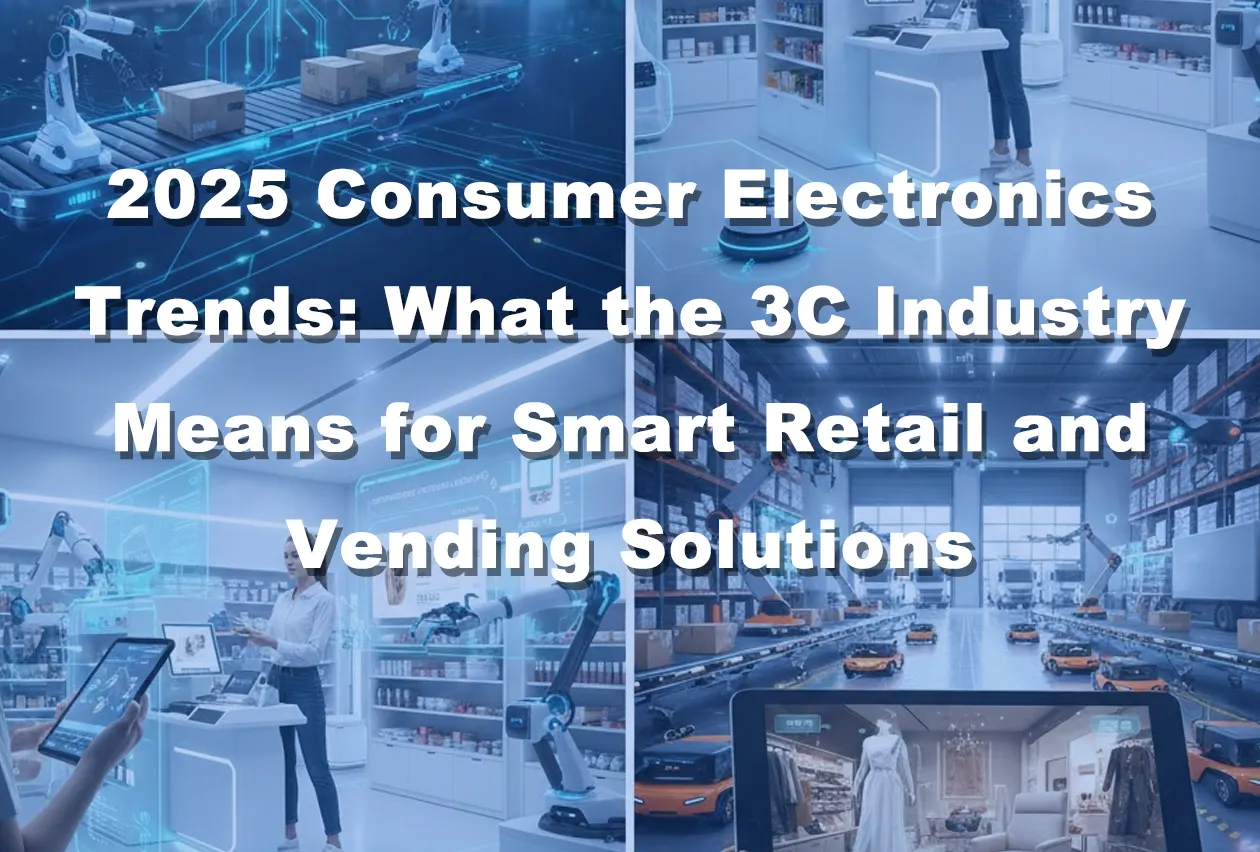
The rapid evolution of consumer electronics has fundamentally changed how people interact with products, services, and retail environments. What started with smartphones and personal devices has now expanded into a much broader ecosystem—one where machines themselves have become smart, connected, and interactive.
In 2025, automated retail is no longer defined by simple vending machines. Powered by advances in 3C technology (Computers, Communications, and Consumer Electronics), today’s smart machines function as fully digital retail terminals. They combine hardware, software, connectivity, and data intelligence to deliver a seamless, self-service shopping experience.
This article explores how 3C technology is driving the rise of automated retail and why smart machines are becoming a critical channel for modern commerce.
The Evolution: From Personal Devices to Intelligent Machines
Consumer electronics were once designed primarily for personal use—smartphones, tablets, laptops, and wearable devices. Over time, the core technologies behind these products began to migrate into commercial applications.
Touchscreens, processors, sensors, and wireless communication modules are no longer exclusive to personal electronics. They now serve as the technological backbone of automated retail systems.
Smart machines represent the next stage of this evolution. They are built using the same principles that made smartphones successful:
- Intuitive user interfaces
- Fast system response
- Reliable connectivity
- Continuous software optimization
The difference is that these technologies are now deployed in public, high-traffic retail environments.
What Makes a Machine “Smart” in Automated Retail?
Embedded Computing Power
At the heart of every smart retail machine is an embedded computer system. These compact computing units handle user interaction, payment processing, inventory tracking, and system diagnostics.
Thanks to advancements in 3C electronics, these systems are now:
- More powerful
- More energy-efficient
- More cost-effective
This allows automated machines to operate reliably around the clock while maintaining a smooth user experience.
Touchscreen Interfaces and Human-Machine Interaction
Touchscreens have become a universal language for consumers. Whether ordering food, buying tickets, or customizing products, users expect a familiar interface.
Modern automated retail machines use high-resolution touch displays to:
- Guide users step by step
- Showcase product options visually
- Support multiple languages
- Reduce user hesitation
The result is higher engagement and improved conversion rates.
Connectivity: The Role of Communication Technology
Connectivity is one of the most critical elements of smart machines. Through cellular networks, Wi-Fi, and cloud platforms, automated retail systems stay constantly connected.
This connectivity enables:
- Remote monitoring and management
- Real-time inventory updates
- Instant payment confirmation
- Over-the-air software updates
From a business perspective, communication technology transforms machines from isolated units into a centrally managed retail network.
How 3C Technology Enables Scalable Automated Retail
Cloud-Based Management Systems
One of the biggest advantages of 3C-driven automation is scalability. Cloud platforms allow operators to manage hundreds of machines from a single dashboard.
Key capabilities include:
- Sales performance tracking
- Inventory alerts
- Error detection and diagnostics
- Location-based data analysis
This level of control significantly reduces operational complexity and labor costs.
Intelligent Sensors and Automation
Sensors play a critical role in ensuring reliability and accuracy. Smart machines use sensors to:
- Detect product dispensing
- Monitor temperature and environment
- Identify system errors
- Prevent fraud or misuse
These features improve both customer satisfaction and long-term machine performance.
Integrated Payment Systems
Cashless payment technology is now an essential component of automated retail. Smart machines support multiple payment methods, including:
- Credit and debit cards
- Mobile wallets
- QR-based payments
Seamless payment integration reduces friction and increases impulse purchases—especially in fast-paced environments.
Why Automated Retail Is Gaining Momentum Worldwide
Changing Consumer Behavior
Modern consumers value speed, convenience, and autonomy. Automated retail aligns perfectly with these expectations by offering:
- No waiting lines
- Instant transactions
- 24/7 availability
As consumers become more comfortable interacting with smart devices, acceptance of automated retail continues to grow.
Operational Efficiency for Businesses
For operators, smart machines deliver measurable business advantages:
- Reduced staffing requirements
- Lower long-term operating costs
- Consistent service quality
- Data-driven decision making
Instead of relying on manual processes, businesses can optimize operations using real-time insights.
Ideal Applications for Smart Machines
Automated retail powered by 3C technology is particularly effective in:
- Shopping malls
- Transportation hubs
- Entertainment venues
- Tourist attractions
- Office buildings
These locations benefit from high foot traffic and demand for quick, self-service purchasing.
The Strategic Value of Data in Smart Retail Machines
Every interaction with a smart machine generates data. Over time, this data becomes a powerful strategic asset.
Operators can analyze:
- Customer preferences
- Peak usage periods
- Product performance
- Regional demand differences
This information supports smarter decisions about product selection, pricing strategies, and machine placement.
In 2025, data-driven automation is no longer a competitive advantage—it’s a baseline requirement.
Looking Ahead: The Future of Smart Machines in Retail
As 3C technology continues to evolve, smart machines will become even more sophisticated.
Future developments may include:
- AI-powered recommendations
- Predictive maintenance
- Personalized user experiences
- Deeper integration with digital ecosystems
Automated retail will continue to blur the line between online and offline commerce, offering consumers the best of both worlds.
Conclusion: Smart Machines Are the New Retail Interface
The rise of automated retail is not a short-term trend—it is a structural shift driven by advances in 3C technology. Smart machines combine the familiarity of consumer electronics with the efficiency of automation, creating a powerful new retail channel.
For business owners, distributors, and technology-focused investors, understanding this transformation is key to staying competitive in an increasingly automated world.