Skip to content
The rapid expansion of electric vehicles is reshaping more than just the automotive industry. It is transforming infrastructure, real estate strategy, and increasingly — unattended retail.
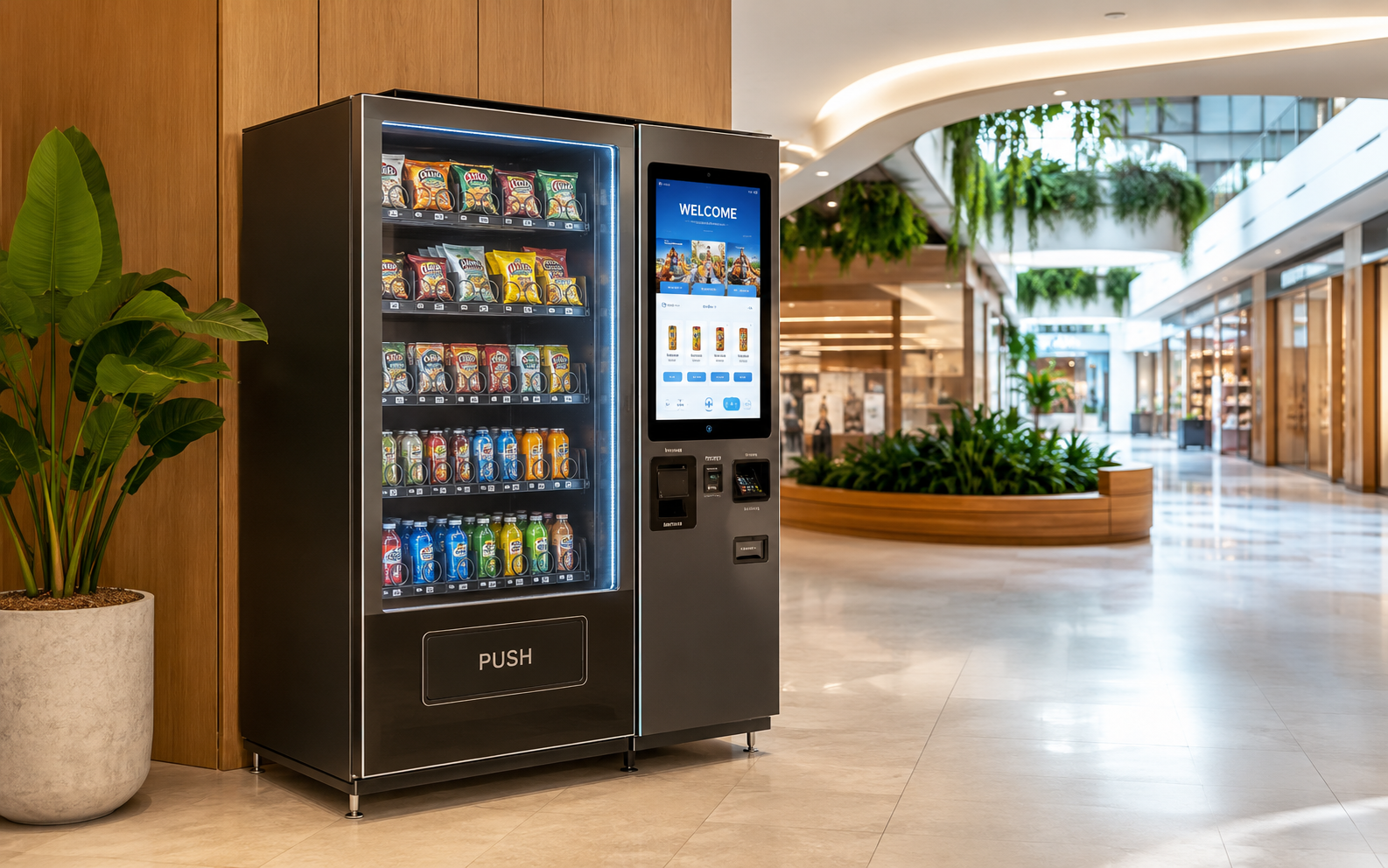
As EV charging stations become common in urban centers, highways, shopping complexes, and residential communities, a new opportunity is emerging: integrating vending machines directly into EV charging locations.
In 2026, forward-thinking operators are no longer viewing charging stations as standalone utilities. Instead, they are becoming micro retail hubs — combining energy, convenience, and digital commerce in one physical footprint.
This shift opens a powerful growth channel for vending operators willing to move early.
Why EV Charging Locations Are Prime Vending Real Estate
Unlike traditional gas stations, EV charging requires longer dwell times.
Typical charging sessions range from:
- 20–40 minutes (fast charging)
- 1–2 hours (destination charging)
- Overnight (residential or workplace charging)
That dwell time changes everything.
Consumers waiting in parking lots are:
- Looking for snacks or beverages
- Checking phones
- Open to impulse purchases
- More likely to browse digital screens
From a retail psychology perspective, EV charging creates a captive, high-intent micro audience.
Strategic Partnerships with Charging Networks
Major charging infrastructure providers such as Tesla (Supercharger network) and ChargePoint are rapidly expanding public charging footprints across North America and Europe.
While these companies focus primarily on power delivery, real estate owners are beginning to monetize the surrounding space.
Opportunities include:
- Smart vending kiosks
- Fresh food cabinets
- Coffee vending stations
- Automated convenience retail pods
Property managers are increasingly open to revenue-sharing models, especially when vending operators can provide:
- Cashless systems
- Remote monitoring
- Low-maintenance hardware
- Energy-efficient equipment
The Business Case: Why This Model Works
1. High Traffic + Predictable Dwell Time
EV drivers are often tech-savvy consumers with above-average income levels. This demographic overlap aligns well with premium vending offerings, including:
- Healthy snacks
- Functional beverages
- Tech accessories
- Travel essentials
Unlike random foot traffic, charging sessions create predictable exposure windows.
2. Digital Screens = Dual Revenue Streams
Modern vending machines often include integrated digital displays.
At EV charging hubs, these screens can serve multiple roles:
- Product promotions
- Charging session updates
- Brand advertisements
- Location-based promotions
Retail media monetization becomes even more powerful in these environments, as advertisers can target drivers waiting on-site.
3. Sustainability Alignment
EV drivers tend to value environmental responsibility. Vending operators that integrate:
- Energy-efficient refrigeration
- Low-GWP refrigerants
- Solar-assisted power
- Eco-friendly packaging options
can position themselves as sustainability-aligned partners.
This alignment increases acceptance from property owners and local municipalities.
Emerging Layout Concepts
The most innovative deployments are no longer simple snack machines placed next to chargers. Instead, operators are experimenting with:
- Modular vending clusters
- Smart coolers + hot beverage units
- Seating + shaded structures
- Fully enclosed micro retail pods
Some pilot projects in parts of Europe and Asia are exploring integrated “charging lounges” where vending becomes part of a curated experience.
The future is not transactional — it’s experiential.
Technology Integration: What Makes It Scalable
To make EV + vending integration viable at scale, operators must prioritize:
Real-Time Monitoring
IoT-based dashboards allow operators to:
- Monitor sales remotely
- Track energy usage
- Identify maintenance issues instantly
Cashless & App-Based Payments
EV users already rely heavily on mobile apps. Seamless NFC, QR, and digital wallet integration are critical.
Predictive Restocking
Charging hubs may see usage spikes during travel seasons or holiday weekends. AI forecasting tools help operators adjust inventory accordingly.
Challenges to Consider
Despite strong potential, integration is not plug-and-play.
Infrastructure Constraints
- Power allocation must be coordinated carefully.
- Network connectivity must be reliable.
- Physical layout planning matters.
Location Economics
Not all charging sites generate sufficient traffic. Operators must evaluate:
- Daily charging sessions
- Demographic alignment
- Proximity to alternative retail options
Regulatory Approvals
Local zoning regulations and property agreements may require negotiation.
However, early adopters who solve these issues gain first-mover advantage.
Where This Trend Is Growing Fastest
The strongest growth signals currently appear in:
- Urban apartment complexes
- Highway fast-charging corridors
- Shopping mall parking structures
- Airport long-term parking
As EV adoption accelerates globally, these charging nodes will multiply — creating compounding opportunities for automated retail expansion.
Strategic Implications for Vending Operators
The convergence of EV infrastructure and vending is not a niche play. It represents:
- A new category of high-dwell retail space
- A sustainability-aligned revenue opportunity
- A data-rich environment for behavioral insights
Operators who develop standardized deployment models now will be positioned to scale as charging infrastructure expands over the next five to ten years.
The question is no longer whether EV growth will continue — but whether vending operators will align themselves with that growth curve.
Conclusion: Energy Meets Commerce
The future of vending lies in proximity to infrastructure transformation.
As electric vehicles redefine transportation habits, they are simultaneously redefining retail touchpoints. EV charging locations offer predictable dwell time, premium customer demographics, and scalable partnership models.
For vending operators looking to secure high-value placements in 2026 and beyond, EV charging integration may become one of the most strategic expansions of the decade.