Skip to content
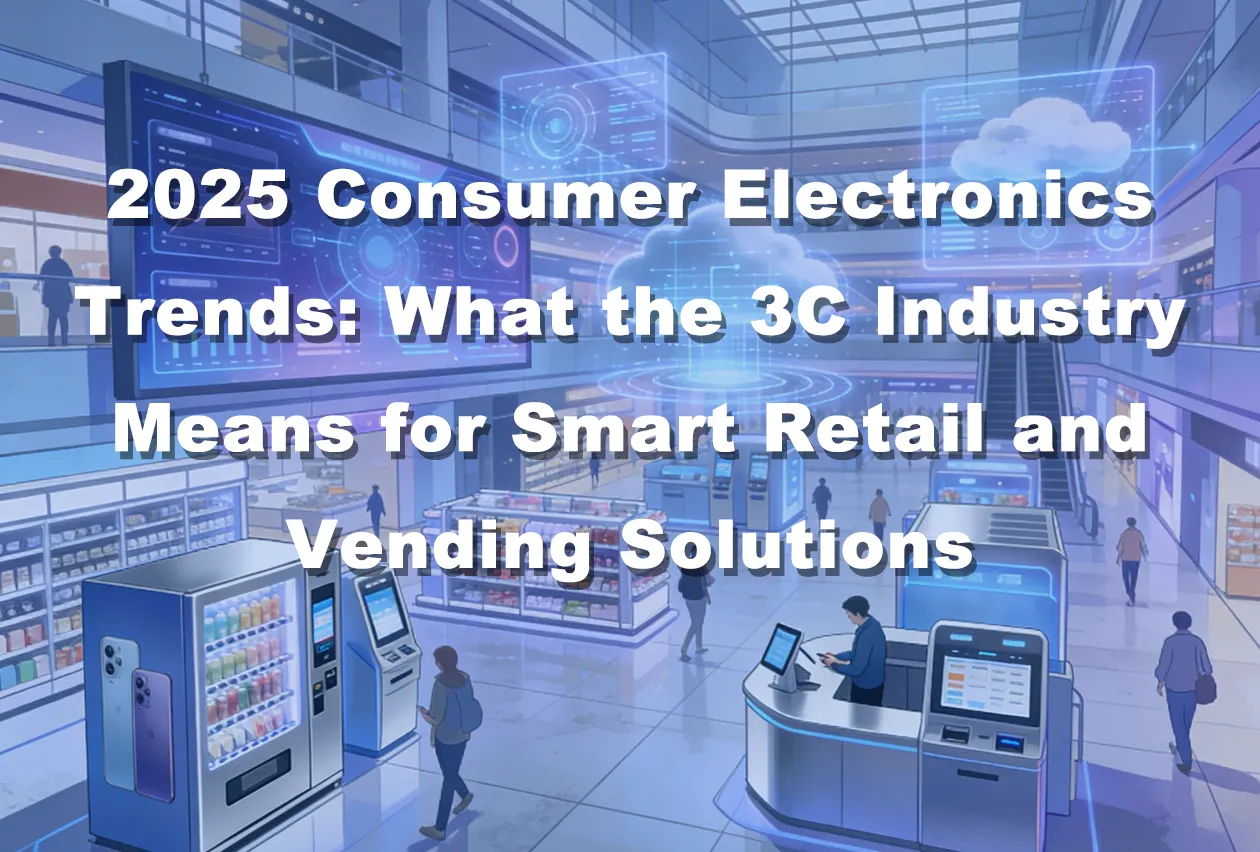
he global consumer electronics industry—often referred to as the 3C market (Computers, Communications, and Consumer Electronics)—is entering a new phase in 2025. Innovation is no longer driven solely by faster processors or sleeker designs. Instead, the focus has shifted toward connectivity, intelligence, personalization, and real-world application scenarios.
For business owners, distributors, and investors exploring smart retail and self-service vending solutions, understanding these trends is no longer optional—it’s a competitive necessity.
In this article, we break down the key consumer electronics trends shaping 2025 and explain how they directly impact the future of automated retail, vending machines, and self-service business models.
The 3C Electronics Market in 2025: A High-Growth, High-Integration Era
The global 3C electronics market continues to show steady growth, driven by rising demand for smart devices, rapid digital transformation, and evolving consumer behavior. However, the most important change is not the size of the market—it’s how electronics are being used.
In 2025, consumer electronics are no longer standalone products. They are embedded systems integrated into retail environments, transportation hubs, entertainment venues, and self-service terminals.
This shift creates new opportunities for:
- Smart vending machines
- Automated kiosks
- Customization-on-demand systems
- Unmanned retail solutions
Electronics are becoming the infrastructure of modern retail, not just the merchandise.
Key Consumer Electronics Trends Defining 2025
1. From Devices to Ecosystems
Consumers now expect seamless interaction between hardware, software, and cloud platforms. Smartphones, tablets, touchscreens, sensors, and payment modules must work together as a unified system.
For smart retail, this means vending machines are evolving into interactive digital terminals:
- Touchscreen interfaces
- Cloud-based inventory management
- Remote monitoring and updates
- Real-time payment processing
The vending machine is no longer “just a machine”—it’s part of a connected ecosystem.
2. Smart Hardware Becomes Standard, Not Premium
In 2025, features once considered “advanced” are becoming standard expectations:
- High-resolution touch displays
- IoT-enabled controllers
- Intelligent sensors
- Cashless and mobile payments
This trend lowers the barrier for smart retail adoption while increasing competition. Businesses that fail to adopt smart hardware risk appearing outdated and inefficient.
For vending and self-service operators, smarter electronics mean:
- Lower labor dependency
- Better operational efficiency
- Improved user experience
- Higher conversion rates
3. Personalization Drives Purchasing Decisions
Modern consumers—especially Gen Z and Millennials—are no longer satisfied with mass-produced products. Personalization has become a key driver of purchasing behavior.
This trend is strongly influencing:
- Customized accessories
- On-demand printing solutions
- Personalized electronics add-ons
In smart retail environments, 3C technology enables instant customization, allowing consumers to interact, design, and purchase in one seamless process.
For vending businesses, personalization turns a machine into an experience, not just a sales point.
How These Trends Impact Smart Retail and Vending Solutions
Electronics Power the Shift to Self-Service Retail
Labor costs, staffing challenges, and changing consumer habits are pushing retailers toward automation. Smart electronics make self-service retail not only possible—but scalable.
Modern vending solutions now rely on:
- Embedded computing systems
- Touchscreen human-machine interfaces
- Cloud connectivity
- Intelligent error detection
The result is 24/7 retail availability, minimal staffing requirements, and consistent service quality.
Consumer Experience Is Now Technology-Driven
In 2025, user experience (UX) is the difference between a machine that attracts attention and one that is ignored.
3C electronics allow vending solutions to offer:
- Fast response times
- Smooth UI interactions
- Multiple payment options
- Clear visual guidance
When the technology feels intuitive and responsive, consumers trust the machine—and are more likely to complete a purchase.
Data Becomes a Strategic Asset
One of the most overlooked benefits of modern consumer electronics is data generation.
Smart vending systems collect valuable insights:
- Purchase behavior
- Peak usage times
- Product popularity
- Regional demand patterns
For operators and distributors, this data enables:
- Smarter inventory planning
- Dynamic pricing strategies
- Location-based optimization
- Better ROI forecasting
In 2025, retail decisions are increasingly data-driven, not intuition-based.
Why Business Owners and Distributors Should Pay Attention
The convergence of 3C electronics and smart retail creates a unique window of opportunity.
Lower Entry Barriers, Higher Scalability
Thanks to standardized smart components and mature supply chains, launching a tech-enabled retail solution is more accessible than ever.
At the same time, cloud-based systems allow businesses to:
- Manage multiple machines remotely
- Expand across locations quickly
- Maintain consistent service quality
This scalability makes smart vending particularly attractive to:
- Retail entrepreneurs
- Shopping mall operators
- Transportation hubs
- Entertainment venues
Technology Is a Differentiator, Not a Cost
Many businesses still view advanced electronics as an expense. In reality, smart hardware is a profit multiplier.
Well-integrated electronics:
- Reduce downtime
- Improve customer satisfaction
- Increase repeat purchases
- Enable premium pricing
In competitive retail environments, technology is often what separates high-performing locations from underperforming ones.
Looking Ahead: The Role of 3C Electronics in Future Retail
As we move beyond 2025, the line between consumer electronics and retail infrastructure will continue to blur.
Future developments will likely include:
- AI-powered user interaction
- Predictive maintenance systems
- Deeper personalization through user data
- Integration with smart city ecosystems
Businesses that understand today’s electronics trends will be best positioned to adopt tomorrow’s retail innovations.
Conclusion: Electronics Trends Shape Retail Winners
The 3C electronics industry is no longer operating in isolation. Its innovations directly shape how consumers interact with retail, how businesses operate, and how value is created.
For smart retail and vending solutions, consumer electronics are the foundation, not an add-on.
Those who stay ahead of electronics trends will not only adapt to the future—they will help define it.